

Netty入门——组件(Channel)一
创始人
2024-01-20 03:35:16
目录
- 一、channel的主要作用
- 二、EventLoop处理io任务代码示例
- 2.1、服务端代码示例
- 2.2、客户端代码示例
- 2.3、服务端和客户端查看控制台输出结果
- 三、ChannelFuture连接问题代码示例
- 3.1、服务端代码示例
- 3.2、客户端代码示例
- 3.3、服务端和客户端查看控制台输出结果
- 3.4、ChannelFuture出现连接问题的原因
- 四、ChannelFuture连接问题的处理方式一(使用sync方法同步处理结果)
- 4.1、服务端代码示例
- 4.2、客户端代码示例
- 4.3、服务端和客户端查看控制台输出结果
- 4.4、客户端代码示例标注位置解释
- 五、ChannelFuture连接问题的处理方式二(使用addListener方法异步处理结果)
- 5.1、服务端代码示例
- 5.2、客户端代码示例
- 5.3、服务端和客户端查看控制台输出结果
- 5.4、客户端代码示例标注位置解释
一、channel的主要作用
| channel 中的方法 | 作用 |
|---|---|
| close() | 用来关闭 channel |
| closeFuture() | 处理 channel 的关闭,sync 方法作用是同步等待 channel 关闭,addListener 方法是异步等待 channel 关闭 |
| pipeline() | 添加处理器 |
| write() | 将数据写入 |
| writeAndFlush() | 将数据写入并刷出 |
二、EventLoop处理io任务代码示例
2.1、服务端代码示例
-
引入pom依赖
io.netty netty-all 4.1.39.Final -
服务端
import io.netty.bootstrap.ServerBootstrap;
import io.netty.buffer.ByteBuf;
import io.netty.channel.ChannelHandlerContext;
import io.netty.channel.ChannelInboundHandlerAdapter;
import io.netty.channel.ChannelInitializer;
import io.netty.channel.DefaultEventLoopGroup;
import io.netty.channel.nio.NioEventLoopGroup;
import io.netty.channel.socket.nio.NioServerSocketChannel;
import io.netty.channel.socket.nio.NioSocketChannel;
import lombok.extern.slf4j.Slf4j;import java.nio.charset.Charset;/*** @description: EventLoop处理io任务 服务端* @author: xz*/
@Slf4j
public class EventLoopServer {public static void main(String[] args) {//创建一个独立的EventLoopGroupDefaultEventLoopGroup normalWorkers = new DefaultEventLoopGroup(2);//1、服务端启动器:负责组装netty组件new ServerBootstrap()//2、将EventLoop分为boss和worker(即将EventLoop分工细化)// boss即第1个参数,只负责accept事件; worker即第2个参数,只负责socketChannel上的读写.group(new NioEventLoopGroup(1), new NioEventLoopGroup(2))//3、选择服务器的 ServerSocketChannel 实现.channel(NioServerSocketChannel.class)//4、添加服务端处理器.childHandler(// 5. channel 代表和客户端进行数据读写的通道 Initializer 初始化,负责添加别的 handlernew ChannelInitializer() {@Overrideprotected void initChannel(NioSocketChannel ch) throws Exception {//6、添加具体 handlerch.pipeline().addLast(normalWorkers,"handler1", new ChannelInboundHandlerAdapter() {@Overridepublic void channelRead(ChannelHandlerContext ctx, Object msg) throws Exception {//msg转ByteBufByteBuf buf = (ByteBuf) msg;//ByteBuf转字符串log.debug(buf.toString(Charset.defaultCharset()));//让消息传递给下一个handlerctx.fireChannelRead(msg);}});}})//7、绑定监听端口.bind(8080);}
}
2.2、客户端代码示例
-
客户端
import io.netty.bootstrap.Bootstrap;
import io.netty.buffer.ByteBufAllocator;
import io.netty.channel.Channel;
import io.netty.channel.ChannelInitializer;
import io.netty.channel.nio.NioEventLoopGroup;
import io.netty.channel.socket.nio.NioSocketChannel;
import io.netty.handler.codec.string.StringEncoder;
import lombok.extern.slf4j.Slf4j;
import java.net.InetSocketAddress;
/*** @description: EventLoop处理io任务 客户端* @author: xz*/
@Slf4j
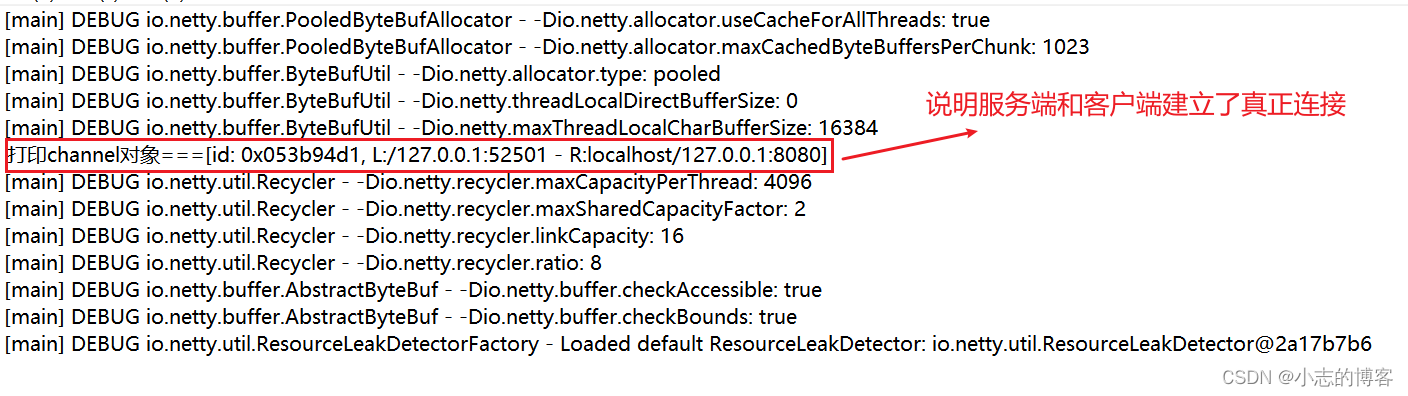
public class EventLoopClient {public static void main(String[] args) throws InterruptedException {// 1. 客户端启动器Channel channel = new Bootstrap()// 2. 添加 EventLoop(事件循环).group(new NioEventLoopGroup(1))// 3. 选择客户端的 SocketChannel 实现.channel(NioSocketChannel.class)// 4. 添加客户端处理器.handler(new ChannelInitializer() {// 在连接建立后被调用@Overrideprotected void initChannel(NioSocketChannel nioSocketChannel) throws Exception {//9. 消息会经过通道 handler 处理,这里是将 String => ByteBuf 发出nioSocketChannel.pipeline().addLast(new StringEncoder());}})//5. 连接到服务器.connect(new InetSocketAddress("localhost", 8080))//6. 等待 connect 建立连接完毕.sync()//7. 连接对象.channel();System.out.println("打印channel对象==="+channel);//8. 发送数据channel.writeAndFlush(ByteBufAllocator.DEFAULT.buffer().writeBytes("aaaaaa".getBytes()));}
}
2.3、服务端和客户端查看控制台输出结果
- 先启动服务端,再启动客户端,查看客户端控制台输出,结果如下:
- 再查看服务端控制台输出,结果如下:

三、ChannelFuture连接问题代码示例
3.1、服务端代码示例
- 同步2.1步骤中的代码
3.2、客户端代码示例
-
将2.2步骤中客户端代码拆开,代码如下
import io.netty.bootstrap.Bootstrap;
import io.netty.channel.Channel;
import io.netty.channel.ChannelFuture;
import io.netty.channel.ChannelFutureListener;
import io.netty.channel.ChannelInitializer;
import io.netty.channel.nio.NioEventLoopGroup;
import io.netty.channel.socket.nio.NioSocketChannel;
import io.netty.handler.codec.string.StringEncoder;
import io.netty.handler.logging.LogLevel;
import io.netty.handler.logging.LoggingHandler;
import lombok.extern.slf4j.Slf4j;import java.net.InetSocketAddress;/*** @description: EventLoop处理io任务中ChannelFuture连接问题* @author: xz*/
@Slf4j
public class ChannelFutureClient {public static void main(String[] args) throws InterruptedException {client1();}/*** 将客户端代码拆开* ChannelFuture连接问题 : connect 方法是异步的,意味着不等连接建立,方法执行就返回了。因此 channelFuture 对象中不能【立刻】获得到正确的 Channel 对象* */public static void client1() throws InterruptedException {ChannelFuture channelFuture = new Bootstrap().group(new NioEventLoopGroup(1)).channel(NioSocketChannel.class).handler(new ChannelInitializer() {@Overrideprotected void initChannel(NioSocketChannel nioSocketChannel) throws Exception {nioSocketChannel.pipeline().addLast(new LoggingHandler(LogLevel.INFO));nioSocketChannel.pipeline().addLast(new StringEncoder());}})//1、连接到服务器//异步非阻塞,main方法发起了调用,真正执行connect是nio线程//返回的是 ChannelFuture 对象,它的作用是利用 channel() 方法来获取 Channel 对象.connect(new InetSocketAddress("localhost", 8080));//无阻塞向下执行获取channelChannel channel = channelFuture.channel();log.info("连接未建立,channel对象====={}",channel);channel.writeAndFlush("aaaaaaaaaaaaaaaaaa");}}
3.3、服务端和客户端查看控制台输出结果
-
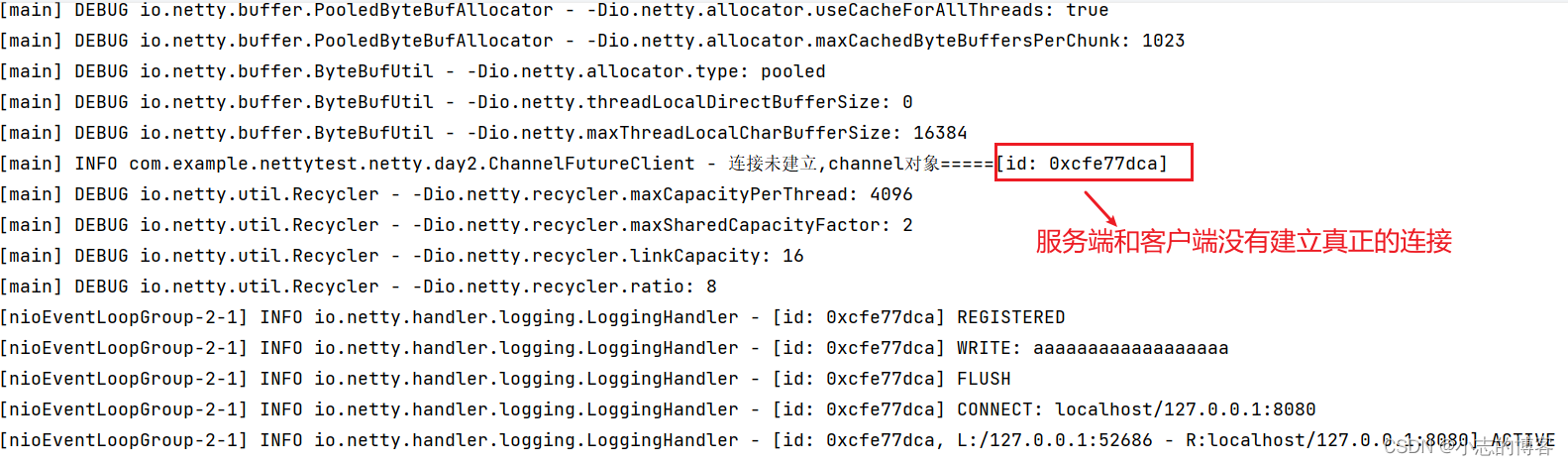
先启动服务端,再启动客户端,查看客户端控制台输出,结果如下:
-
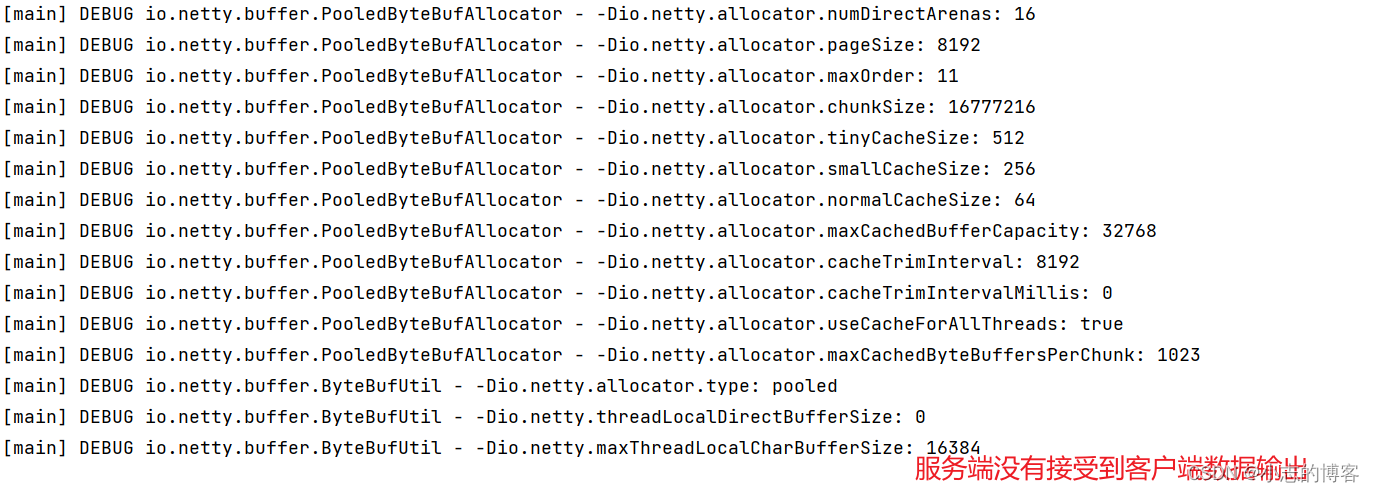
再查看服务端控制台输出,结果如下:
3.4、ChannelFuture出现连接问题的原因
- 由上述代码示例可知,connect 方法是异步的,意味着不等连接建立,方法执行就返回了。因此 channelFuture 对象中不能【立刻】获得到正确的 Channel 对象。
四、ChannelFuture连接问题的处理方式一(使用sync方法同步处理结果)
4.1、服务端代码示例
- 同步2.1步骤中的代码
4.2、客户端代码示例
-
将3.2步骤中客户端代码进行修改,代码如下
import io.netty.bootstrap.Bootstrap;
import io.netty.channel.Channel;
import io.netty.channel.ChannelFuture;
import io.netty.channel.ChannelFutureListener;
import io.netty.channel.ChannelInitializer;
import io.netty.channel.nio.NioEventLoopGroup;
import io.netty.channel.socket.nio.NioSocketChannel;
import io.netty.handler.codec.string.StringEncoder;
import io.netty.handler.logging.LogLevel;
import io.netty.handler.logging.LoggingHandler;
import lombok.extern.slf4j.Slf4j;import java.net.InetSocketAddress;/*** @description: EventLoop处理io任务中ChannelFuture连接问题及处理结果* @author: xz*/
@Slf4j
public class ChannelFutureClient {public static void main(String[] args) throws InterruptedException {client2();}public static void client2() throws InterruptedException {ChannelFuture channelFuture = new Bootstrap().group(new NioEventLoopGroup(1)).channel(NioSocketChannel.class).handler(new ChannelInitializer() {@Overrideprotected void initChannel(NioSocketChannel nioSocketChannel) throws Exception {nioSocketChannel.pipeline().addLast(new LoggingHandler(LogLevel.INFO));nioSocketChannel.pipeline().addLast(new StringEncoder());}})//1、连接到服务器//异步非阻塞,main方法发起了调用,真正执行connect是nio线程.connect(new InetSocketAddress("localhost", 8080));//无阻塞向下执行获取channelChannel channel = channelFuture.channel();log.info("连接未建立,打印channel对象====={}",channel);//2//使用sync方法同步处理结果,阻塞当前线程,直到nio线程连接建立完毕channelFuture.sync(); // 3log.info("建立连接后,打印channel对象====={}",channel); // 4channel.writeAndFlush("bbbbbbbbb");}
}
4.3、服务端和客户端查看控制台输出结果
-
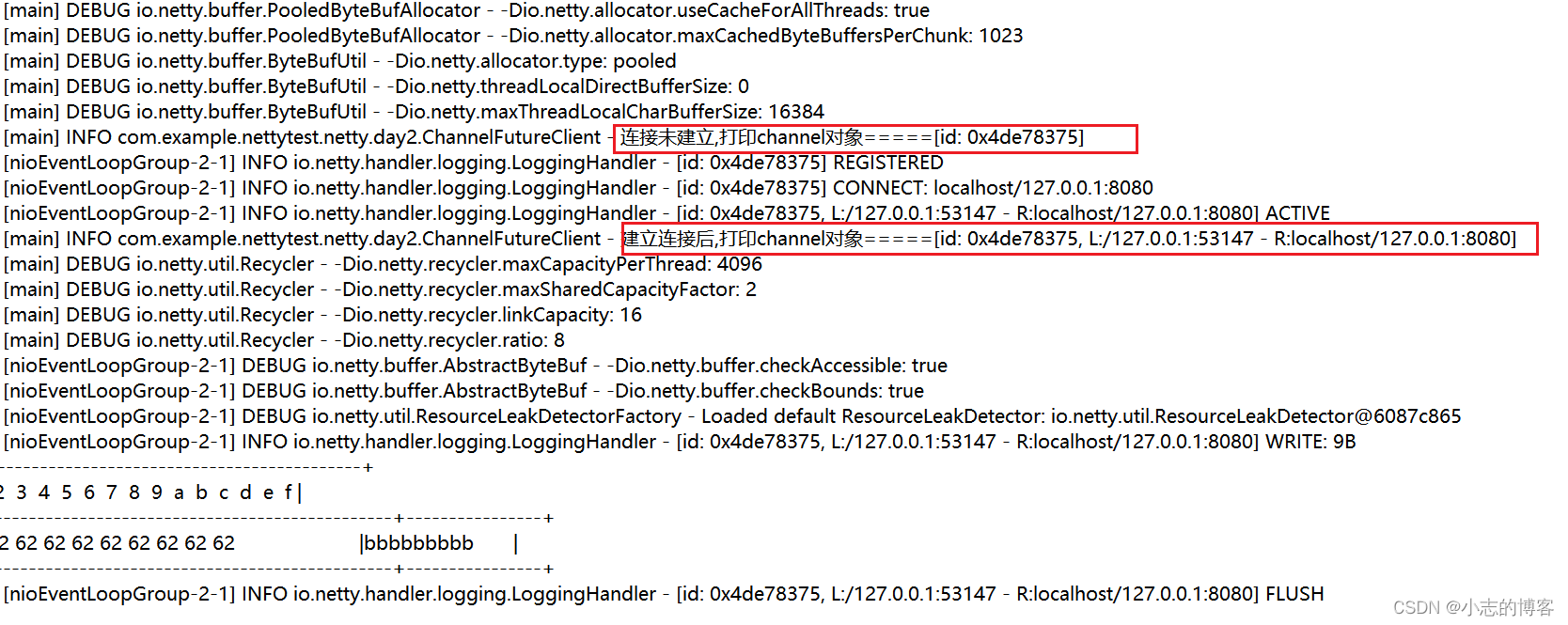
先启动服务端,再启动客户端,查看客户端控制台输出,结果如下:
-
再查看服务端控制台输出,结果如下:
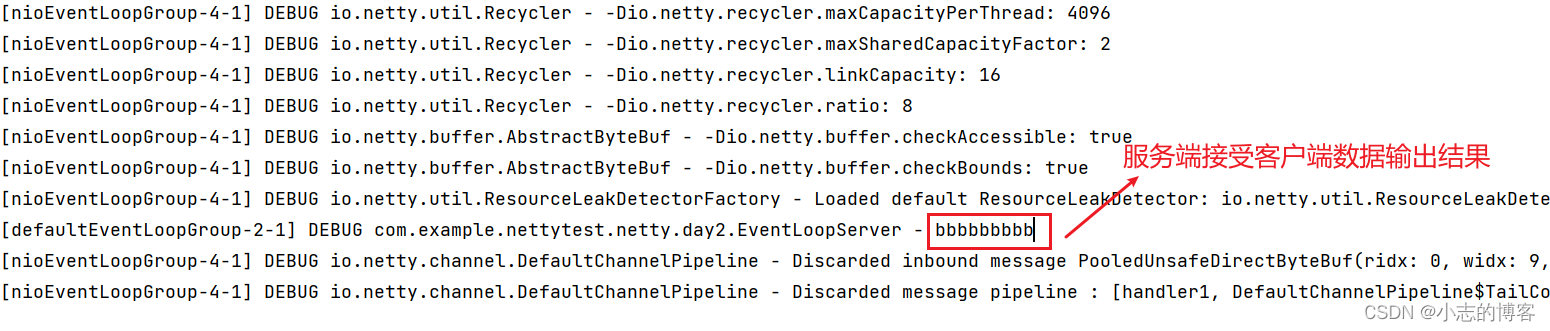
4.4、客户端代码示例标注位置解释
- 执行到 2 位置时,连接未建立,打印[id: 0x4de78375]
- 执行到 3 位置时,sync 方法是同步等待连接建立完成
- 执行到 4 位置时,连接肯定建立了,打印[id: 0x4de78375, L:/127.0.0.1:53147 - R:localhost/127.0.0.1:8080]
五、ChannelFuture连接问题的处理方式二(使用addListener方法异步处理结果)
5.1、服务端代码示例
- 同步2.1步骤中的代码
5.2、客户端代码示例
-
将3.2步骤中客户端代码进行修改,代码如下
import io.netty.bootstrap.Bootstrap;
import io.netty.channel.Channel;
import io.netty.channel.ChannelFuture;
import io.netty.channel.ChannelFutureListener;
import io.netty.channel.ChannelInitializer;
import io.netty.channel.nio.NioEventLoopGroup;
import io.netty.channel.socket.nio.NioSocketChannel;
import io.netty.handler.codec.string.StringEncoder;
import io.netty.handler.logging.LogLevel;
import io.netty.handler.logging.LoggingHandler;
import lombok.extern.slf4j.Slf4j;import java.net.InetSocketAddress;/*** @description: EventLoop处理io任务中ChannelFuture连接问题及处理结果* @author: xz*/
@Slf4j
public class ChannelFutureClient {public static void main(String[] args) throws InterruptedException {client3();}public static void client3() throws InterruptedException {ChannelFuture channelFuture = new Bootstrap().group(new NioEventLoopGroup(1)).channel(NioSocketChannel.class).handler(new ChannelInitializer() {@Overrideprotected void initChannel(NioSocketChannel nioSocketChannel) throws Exception {nioSocketChannel.pipeline().addLast(new LoggingHandler(LogLevel.INFO));nioSocketChannel.pipeline().addLast(new StringEncoder());}})//1、连接到服务器//异步非阻塞,main方法发起了调用,真正执行connect是nio线程.connect(new InetSocketAddress("localhost", 8080));//无阻塞向下执行获取channelChannel channel = channelFuture.channel();log.info("连接未建立,打印channel对象====={}",channel);  // 2channelFuture.addListener((ChannelFutureListener) future-> {log.info("建立连接后,打印channel对象====={}",future.channel());//3channel.writeAndFlush("ccccccccccc");});}
}
5.3、服务端和客户端查看控制台输出结果
-
先启动服务端,再启动客户端,查看客户端控制台输出,结果如下:
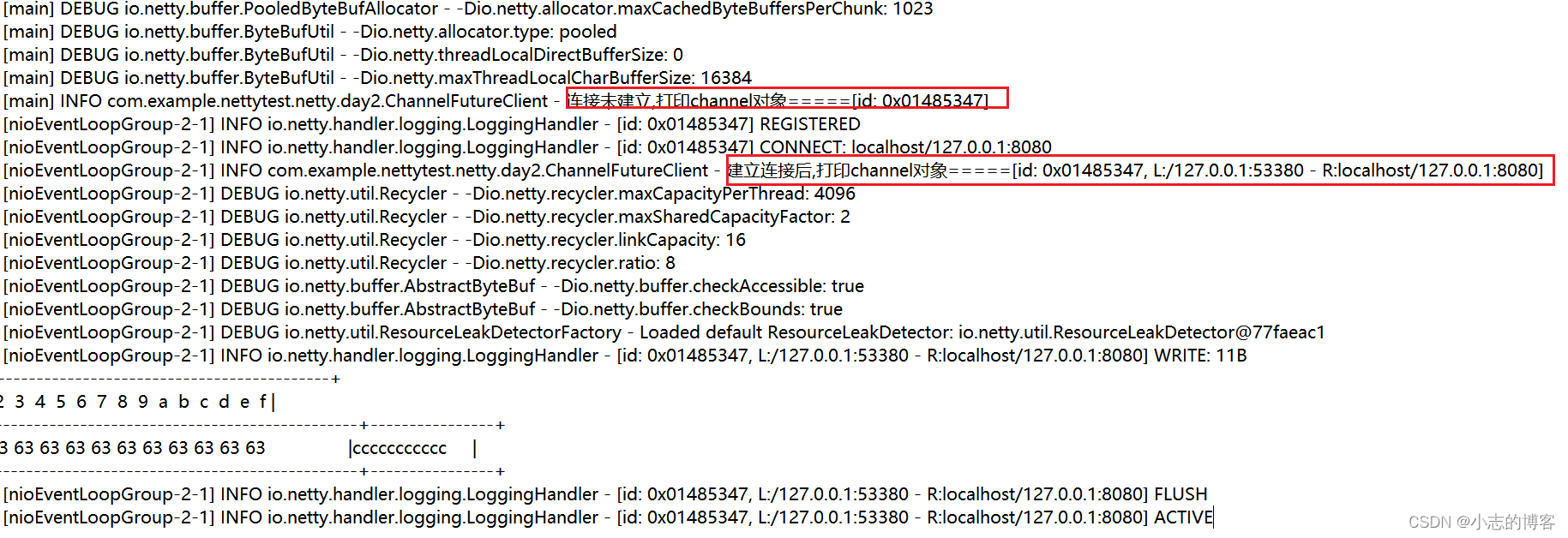
-
再查看服务端控制台输出,结果如下:
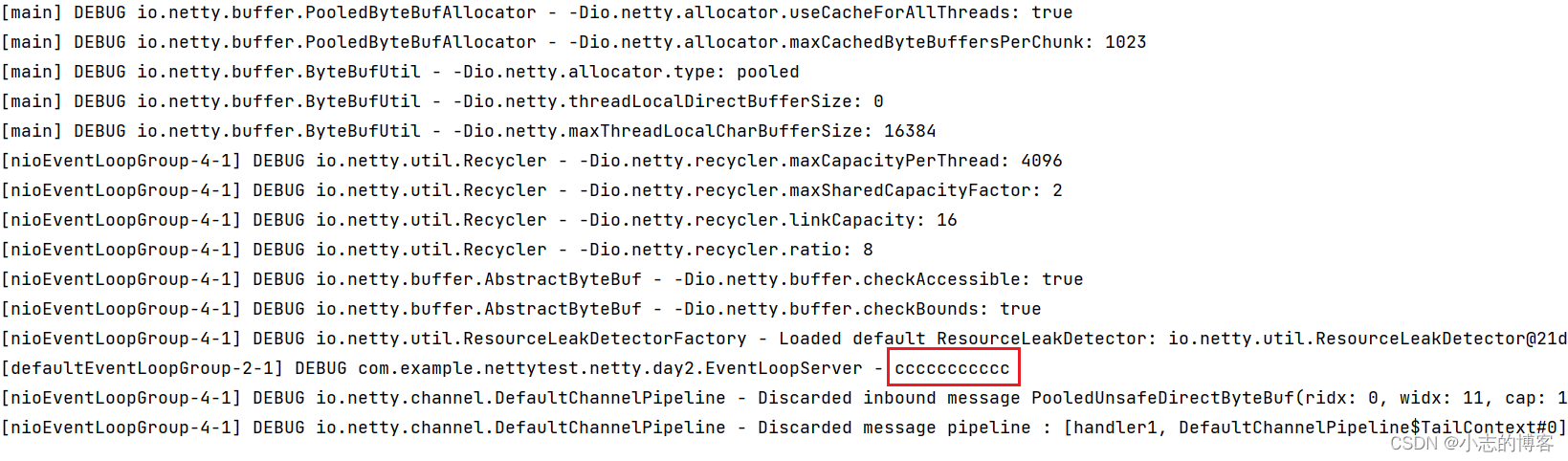
5.4、客户端代码示例标注位置解释
- 执行到 2 位置时,连接未建立,打印[id: 0x01485347]
- ChannelFutureListener 会在连接建立时被调用(其中 operationComplete 方法),因此执行到 3 位置时,连接肯定建立了,打印[id: 0x01485347, L:/127.0.0.1:53380 - R:localhost/127.0.0.1:8080]
相关内容
热门资讯
埃菲尔铁塔在哪 中国仿建埃菲尔...
2019年4月26日,广西南宁市,街头惊现一座巨型山寨版埃菲尔铁塔,高约20米,白色塔身,造型逼真,...
苗族的传统节日 贵州苗族节日有...
【岜沙苗族芦笙节】岜沙,苗语叫“分送”,距从江县城7.5公里,是世界上最崇拜树木并以树为神的枪手部落...
苁蓉的食用方法 鲜苁蓉的吃法有...
肉苁蓉号称“温而不热,补而不峻,暖而不燥,滑而不泄,故有从容之名。”历来也是传统药食同源的滋补佳品。...
北京的名胜古迹 北京最著名的景...
北京从元代开始,逐渐走上帝国首都的道路,先是成为大辽朝五大首都之一的南京城,随着金灭辽,金代从海陵王...
应用未安装解决办法 平板应用未...
---IT小技术,每天Get一个小技能!一、前言描述苹果IPad2居然不能安装怎么办?与此IPad不...
脚上的穴位图 脚面经络图对应的...
人体穴位作用图解大全更清晰直观的标注了各个人体穴位的作用,包括头部穴位图、胸部穴位图、背部穴位图、胳...
长白山自助游攻略 吉林长白山游...
昨天介绍了西坡的景点详细请看链接:一个人的旅行,据说能看到长白山天池全凭运气,您的运气如何?今日介绍...
猫咪吃了塑料袋怎么办 猫咪误食...
你知道吗?塑料袋放久了会长猫哦!要说猫咪对塑料袋的喜爱程度完完全全可以媲美纸箱家里只要一有塑料袋的响...
世界上最漂亮的人 世界上最漂亮...
此前在某网上,选出了全球265万颜值姣好的女性。从这些数量庞大的女性群体中,人们投票选出了心目中最美...
埃菲尔铁塔在哪 中国仿建埃菲尔...
2019年4月26日,广西南宁市,街头惊现一座巨型山寨版埃菲尔铁塔,高约20米,白色塔身,造型逼真,...
阳澄湖在哪里哪个省的 阳澄湖是...
点击题目下方苏州生活指南有用 有趣 有态度近期的阳澄湖度很高,3月24日,央视二套《第一时间》直播连...
苗族的传统节日 贵州苗族节日有...
【岜沙苗族芦笙节】岜沙,苗语叫“分送”,距从江县城7.5公里,是世界上最崇拜树木并以树为神的枪手部落...
北京的名胜古迹 北京最著名的景...
北京从元代开始,逐渐走上帝国首都的道路,先是成为大辽朝五大首都之一的南京城,随着金灭辽,金代从海陵王...