

org.activiti.engine
org.activiti.engine
- 目录
- 概述
- 需求:
- 设计思路
- 实现思路分析
- 1.TaskService
- 2.RuntimeService
- 3.ProcessEngines
- 4.ProcessEngineLifecycleListener
- 5.ProcessEngines
- 参考资料和推荐阅读
Survive by day and develop by night.
talk for import biz , show your perfect code,full busy,skip hardness,make a better result,wait for change,challenge Survive.
happy for hardess to solve denpendies.
目录

概述
org.activiti.engine是一个非常常见的需求。
需求:
设计思路
实现思路分析
1.TaskService
public interface TaskService {/*** Creates a new task that is not related to any process instance.** The returned task is transient and must be saved with {@link #saveTask(Task)} 'manually'.*/Task newTask();/** create a new task with a user defined task id */Task newTask(String taskId);/*** Saves the given task to the persistent data store. If the task is already present in the persistent store, it is updated. After a new task has been saved, the task instance passed into this* method is updated with the id of the newly created task.** @param task* the task, cannot be null.*/Task saveTask(Task task);/*** Deletes the given task, not deleting historic information that is related to this task.** @param taskId* The id of the task that will be deleted, cannot be null. If no task exists with the given taskId, the operation is ignored.* @throws ActivitiObjectNotFoundException* when the task with given id does not exist.* @throws ActivitiException* when an error occurs while deleting the task or in case the task is part of a running process.*/void deleteTask(String taskId);/*** Deletes all tasks of the given collection, not deleting historic information that is related to these tasks.** @param taskIds* The id's of the tasks that will be deleted, cannot be null. All id's in the list that don't have an existing task will be ignored.* @throws ActivitiObjectNotFoundException* when one of the task does not exist.* @throws ActivitiException* when an error occurs while deleting the tasks or in case one of the tasks is part of a running process.*/void deleteTasks(Collection taskIds);/*** Deletes the given task.** @param taskId* The id of the task that will be deleted, cannot be null. If no task exists with the given taskId, the operation is ignored.* @param cascade* If cascade is true, also the historic information related to this task is deleted.* @throws ActivitiObjectNotFoundException* when the task with given id does not exist.* @throws ActivitiException* when an error occurs while deleting the task or in case the task is part of a running process.*/void deleteTask(String taskId, boolean cascade);/*** Deletes all tasks of the given collection.** @param taskIds* The id's of the tasks that will be deleted, cannot be null. All id's in the list that don't have an existing task will be ignored.* @param cascade* If cascade is true, also the historic information related to this task is deleted.* @throws ActivitiObjectNotFoundException* when one of the tasks does not exist.* @throws ActivitiException* when an error occurs while deleting the tasks or in case one of the tasks is part of a running process.*/void deleteTasks(Collection taskIds, boolean cascade);/*** Deletes the given task, not deleting historic information that is related to this task..** @param taskId* The id of the task that will be deleted, cannot be null. If no task exists with the given taskId, the operation is ignored.* @param deleteReason* reason the task is deleted. Is recorded in history, if enabled.* @throws ActivitiObjectNotFoundException* when the task with given id does not exist.* @throws ActivitiException* when an error occurs while deleting the task or in case the task is part of a running process*/void deleteTask(String taskId, String deleteReason);/*** Deletes the given task, not deleting historic information that is related to this task..** @param taskId* The id of the task that will be deleted, cannot be null. If no task exists with the given taskId, the operation is ignored.* @param deleteReason* reason the task is deleted. Is recorded in history, if enabled.* @param cancel* mark the task as cancelled* @throws ActivitiObjectNotFoundException* when the task with given id does not exist.* @throws ActivitiException* when an error occurs while deleting the task or in case the task is part of a running process*/void deleteTask(String taskId, String deleteReason, boolean cancel);/*** Deletes all tasks of the given collection, not deleting historic information that is related to these tasks.** @param taskIds* The id's of the tasks that will be deleted, cannot be null. All id's in the list that don't have an existing task will be ignored.* @param deleteReason* reason the task is deleted. Is recorded in history, if enabled.* @throws ActivitiObjectNotFoundException* when one of the tasks does not exist.* @throws ActivitiException* when an error occurs while deleting the tasks or in case one of the tasks is part of a running process.*/void deleteTasks(Collection taskIds, String deleteReason);/*** Deletes all tasks of the given collection, not deleting historic information that is related to these tasks.** @param taskIds* The id's of the tasks that will be deleted, cannot be null. All id's in the list that don't have an existing task will be ignored.* @param deleteReason* reason the task is deleted. Is recorded in history, if enabled.* @oaramn cancel* mark the task as cancelled* @throws ActivitiObjectNotFoundException* when one of the tasks does not exist.* @throws ActivitiException* when an error occurs while deleting the tasks or in case one of the tasks is part of a running process.*/void deleteTasks(Collection taskIds, String deleteReason, boolean cancel);/*** Claim responsibility for a task: the given user is made assignee for the task. The difference with {@link #setAssignee(String, String)} is that here a check is done if the task already has a user* assigned to it. No check is done whether the user is known by the identity component.** @param taskId* task to claim, cannot be null.* @param userId* user that claims the task. When userId is null the task is unclaimed, assigned to no one.* @throws ActivitiObjectNotFoundException* when the task doesn't exist.* @throws ActivitiTaskAlreadyClaimedException* when the task is already claimed by another user.*/void claim(String taskId, String userId);/*** A shortcut to {@link #claim} with null user in order to unclaim the task** @param taskId* task to unclaim, cannot be null.* @throws ActivitiObjectNotFoundException* when the task doesn't exist.*/void unclaim(String taskId);/*** Called when the task is successfully executed.** @param taskId* the id of the task to complete, cannot be null.* @throws ActivitiObjectNotFoundException* when no task exists with the given id.* @throws ActivitiException* when this task is {@link DelegationState#PENDING} delegation.*/void complete(String taskId);/*** Delegates the task to another user. This means that the assignee is set and the delegation state is set to {@link DelegationState#PENDING}. If no owner is set on the task, the owner is set to the* current assignee of the task.** @param taskId* The id of the task that will be delegated.* @param userId* The id of the user that will be set as assignee.* @throws ActivitiObjectNotF
2.RuntimeService
public interface RuntimeService {/*** Create a {@link ProcessInstanceBuilder}, that allows to set various options for starting a process instance,* as an alternative to the various startProcessInstanceByXX methods.*/ProcessInstanceBuilder createProcessInstanceBuilder();/*** Starts a process instance previously created.** @param createdProcessInstance* The already created process instance.* @throws ActivitiObjectNotFoundException* when user does not have permission to start the process instance* @throws NotFoundException* when no process instance with the given id is found*/ProcessInstance startCreatedProcessInstance(ProcessInstance createdProcessInstance, Map variables);/*** Starts a new process instance in the latest version of the process definition with the given key.** @param processDefinitionKey* key of process definition, cannot be null.* @throws ActivitiObjectNotFoundException* when no process definition is deployed with the given key.*/ProcessInstance startProcessInstanceByKey(String processDefinitionKey);/*** Starts a new process instance in the latest version of the process definition with the given key.** A business key can be provided to associate the process instance with a certain identifier that has a clear business meaning. For example in an order process, the business key could be an order* id. This business key can then be used to easily look up that process instance , see {@link ProcessInstanceQuery#processInstanceBusinessKey(String)}. Providing such a business key is definitely a* best practice.** @param processDefinitionKey* key of process definition, cannot be null.* @param businessKey* a key that uniquely identifies the process instance in the context or the given process definition.* @throws ActivitiObjectNotFoundException* when no process definition is deployed with the given key.*/ProcessInstance startProcessInstanceByKey(String processDefinitionKey, String businessKey);/*** Starts a new process instance in the latest version of the process definition with the given key** @param processDefinitionKey* key of process definition, cannot be null.* @param variables* the variables to pass, can be null.* @throws ActivitiObjectNotFoundException* when no process definition is deployed with the given key.*/ProcessInstance startProcessInstanceByKey(String processDefinitionKey, Map variables);/*** Starts a new process instance in the latest version of the process definition with the given key.** A business key can be provided to associate the process instance with a certain identifier that has a clear business meaning. For example in an order process, the business key could be an order* id. This business key can then be used to easily look up that process instance , see {@link ProcessInstanceQuery#processInstanceBusinessKey(String)}. Providing such a business key is definitely a* best practice.** The combination of processdefinitionKey-businessKey must be unique.** @param processDefinitionKey* key of process definition, cannot be null.* @param variables* the variables to pass, can be null.* @param businessKey* a key that uniquely identifies the process instance in the context or the given process definition.* @throws ActivitiObjectNotFoundException* when no process definition is deployed with the given key.*/ProcessInstance startProcessInstanceByKey(String processDefinitionKey, String businessKey, Map variables);/*** Similar to {@link #startProcessInstanceByKey(String)}, but using a specific tenant identifier.*/ProcessInstance startProcessInstanceByKeyAndTenantId(String processDefinitionKey, String tenantId);/*** Similar to {@link #startProcessInstanceByKey(String, String)}, but using a specific tenant identifier.*/ProcessInstance startProcessInstanceByKeyAndTenantId(String processDefinitionKey, String businessKey, String tenantId);/*** Similar to {@link #startProcessInstanceByKey(String, Map)}, but using a specific tenant identifier.*/ProcessInstance startProcessInstanceByKeyAndTenantId(String processDefinitionKey, Map variables, String tenantId);/*** Similar to {@link #startProcessInstanceByKey(String, String, Map)}, but using a specific tenant identifier.*/ProcessInstance startProcessInstanceByKeyAndTenantId(String processDefinitionKey, String businessKey, Map variables, String tenantId);/*** Starts a new process instance in the exactly specified version of the process definition with the given id.** @param processDefinitionId* the id of the process definition, cannot be null.* @throws ActivitiObjectNotFoundException* when no process definition is deployed with the given key.*/ProcessInstance startProcessInstanceById(String processDefinitionId);/*** Starts a new process instance in the exactly specified version of the process definition with the given id.** A business key can be provided to associate the process instance with a certain identifier that has a clear business meaning. For example in an order process, the business key could be an order* id. This business key can then be used to easily look up that process instance , see {@link ProcessInstanceQuery#processInstanceBusinessKey(String)}. Providing such a business key is definitely a* best practice.** @param processDefinitionId* the id of the process definition, cannot be null.* @param businessKey* a key that uniquely identifies the process instance in the context or the given process definition.* @throws ActivitiObjectNotFoundException* when no process definition is deployed with the given key.*/ProcessInstance startProcessInstanceById(String processDefinitionId, String businessKey);/*** Starts a new process instance in the exactly specified version of the process definition with the given id.** @param processDefinitionId* the id of the process definition, cannot be null.* @param variables* variables to be passed, can be null* @throws ActivitiObjectNotFoundException* when no process definition is deployed with the given key.*/ProcessInstance startProcessInstanceById(String processDefinitionId, Map variables);/*** Starts a new process instance in the exactly specified version of the process definition with the given id.** A business key can be provided to associate the process instance with a certain identifier that has a clear business meaning. For example in an order process, the business key could be an order* id. This business key can then be used to easily look up that process instance , see {@link ProcessInstanceQuery#processInstanceBusinessKey(String)}. Providing such a business key is definitely a* best practice.** @param processDefinitionId* the id of the process definition, cannot be null.* @param variables* variables to be passed, can be null* @throws ActivitiObjectNotFoundException* when no process definition is deployed with the given key.*/ProcessInstance startProcessInstanceById(String processDefinitionId, String businessKey, Map variables);/*** * Signals the process engine that a message is received and starts a new {@link ProcessInstance}.*
** * Calling this method can have two different outcomes:*
* - If the message name is associated with a message start event, a new process instance is started.
* - If no subscription to a message with the given name exists, {@link ActivitiException} is thrown
*
* ** @param messageName* the 'name' of the message as specified as an attribute on the bpmn20 {@code * Signals the process engine that a message is received and starts a new {@link ProcessInstance}.*
** See {@link #startProcessInstanceByMessage(String, Map)}. This method allows specifying a business key.** @param messageName* the 'name' of the message as specified as an attribute on the bpmn20 {@code * Signals the process engine that a message is received and starts a new {@link ProcessInstance}.*
** See {@link #startProcessInstanceByMessage(String)}. In addition, this method allows specifying a the payload of the message as a map of process variables.** @param messageName* the 'name' of the message as specified as an attribute on the bpmn20 {@code processVariables);/*** Similar to {@link RuntimeService#startProcessInstanceByMessage(String, Map)}, but with tenant context.*/ProcessInstance startProcessInstanceByMessageAndTenantId(String messageName, Map processVariables, String tenantId);/*** * Signals the process engine that a message is received and starts a new {@link ProcessInstance}.*
** See {@link #startProcessInstanceByMessage(String, Map)}. In addition, this method allows specifying a business key.** @param messageName* the 'name' of the message as specified as an attribute on the bpmn20 {@code processVariables);/*** Similar to {@link RuntimeService#startProcessInstanceByMessage(String, String, Map)}, but with tenant context.*/ProcessInstance startProcessInstanceByMessageAndTenantId(String messageName, String businessKey, Map processVariables, String tenantId);/*** Delete an existing runtime process instance.** @param processInstanceId* id of process instance to delete, cannot be null.* @param deleteReason* reason for deleting, can be null.* @throws ActivitiObjectNotFoundException* when no process instance is found with the given id.*/void deleteProcessInstance(String processInstanceId, String deleteReason);/*** Finds the activity ids for all executions that are waiting in activities. This is a list because a single activity can be active multiple times.** @param executionId* id of the execution, cannot be null.* @throws ActivitiObjectNotFoundException* when no execution exists with the given executionId.*/List getActiveActivityIds(String executionId);/*** Sends an external trigger to an activity instance that is waiting inside the given execution.** @param executionId* id of execution to signal, cannot be null.* @throws ActivitiObjectNotFoundException* when no execution is found for the given executionId.*/void trigger(String executionId);/*** Sends an external trigger to an activity instance that is waiting inside the given execution.** @param executionId* id of execution to signal, cannot be null.* @param processVariables* a map of process variables* @throws ActivitiObjectNotFoundException* when no execution is found for the given executionId.*/void trigger(String executionId, Map processVariables);/*** Similar to {@link #trigger(String, Map)}, but with an extra parameter that allows to pass* transient variables.*/void trigger(String executionId, Map processVariables, Map transientVariables);/*** Updates the business key for the provided process instance** @param processInstanceId* id of the process instance to set the business key, cannot be null* @param businessKey* new businessKey value*/void updateBusinessKey(String processInstanceId, String businessKey);// Identity Links// ////*** Involves a user with a process instance. The type of identity link is defined by the given identityLinkType.** @param processInstanceId* id of the process instance, cannot be null.* @param userId* id of the user involve, cannot be null.* @param identityLinkType* type of identityLink, cannot be null (@see {@link IdentityLinkType}).* @throws ActivitiObjectNotFoundException* when the process instance doesn't exist.*/void addUserIdentityLink(String processInstanceId, String userId, String identityLinkType);/*** Involves a group with a process instance. The type of identityLink is defined by the given identityLink.** @param processInstanceId* id of the process instance, cannot be null.* @param groupId* id of the group to involve, cannot be null.* @param identityLinkType* type of identity, cannot be null (@see {@link IdentityLinkType}).* @throws ActivitiObjectNotFoundException* when the process instance or group doesn't exist.*/void addGroupIdentityLink(String processInstanceId, String groupId, String identityLinkType);/*** Convenience shorthand for {@link #addUserIdentityLink(String, String, String)}; with type {@link IdentityLinkType#CANDIDATE}** @param processInstanceId* id of the process instance, cannot be null.* @param userId* id of the user to use as candidate, cannot be null.* @throws ActivitiObjectNotFoundException* when the task or user doesn't exist.*/void addParticipantUser(String processInstanceId, String userId);/*** Convenience shorthand for {@link #addGroupIdentityLink(String, String, String)}; with type {@link IdentityLinkType#CANDIDATE}** @param processInstanceId* id of the process instance, cannot be null.* @param groupId* id of the group to use as candidate, cannot be null.* @throws ActivitiObjectNotFoundException* when the task or group doesn't exist.*/void addParticipantGroup(String processInstanceId, String groupId);/*** Convenience shorthand for {@link #deleteUserIdentityLink(String, String, String)}; with type {@link IdentityLinkType#CANDIDATE}** @param processInstanceId* id of the process instance, cannot be null.* @param userId* id of the user to use as candidate, cannot be null.* @throws ActivitiObjectNotFoundException* when the task or user doesn't exist.*/void deleteParticipantUser(String processInstanceId, String userId);/*** Convenience shorthand for {@link #deleteGroupIdentityLink(String, String, String)}; with type {@link IdentityLinkType#CANDIDATE}** @param processInstanceId* id of the process instance, cannot be null.* @param groupId* id of the group to use as candidate, cannot be null.* @throws ActivitiObjectNotFoundException* when the task or group doesn't exist.*/void deleteParticipantGroup(String processInstanceId, String groupId);/*** Removes the association between a user and a process instance for the given identityLinkType.** @param processInstanceId* id of the process instance, cannot be null.* @param userId* id of the user involve, cannot be null.* @param identityLinkType* type of identityLink, cannot be null (@see {@link IdentityLinkType}).* @throws ActivitiObjectNotFoundException* when the task or user doesn't exist.*/void deleteUserIdentityLink(String processInstanceId, String userId, String identityLinkType);/*** Removes the association between a group and a process instance for the given identityLinkType.** @param processInstanceId* id of the process instance, cannot be null.* @param groupId* id of the group to involve, cannot be null.* @param identityLinkType* type of identity, cannot be null (@see {@link IdentityLinkType}).* @throws ActivitiObjectNotFoundException* when the task or group doesn't exist.*/void deleteGroupIdentityLink(String processInstanceId, String groupId, String identityLinkType);/*** Retrieves the {@link IdentityLink}s associated with the given process instance. Such an {@link IdentityLink} informs how a certain user is involved with a process instance.*/List getIdentityLinksForProcessInstance(String instanceId);// Variables// 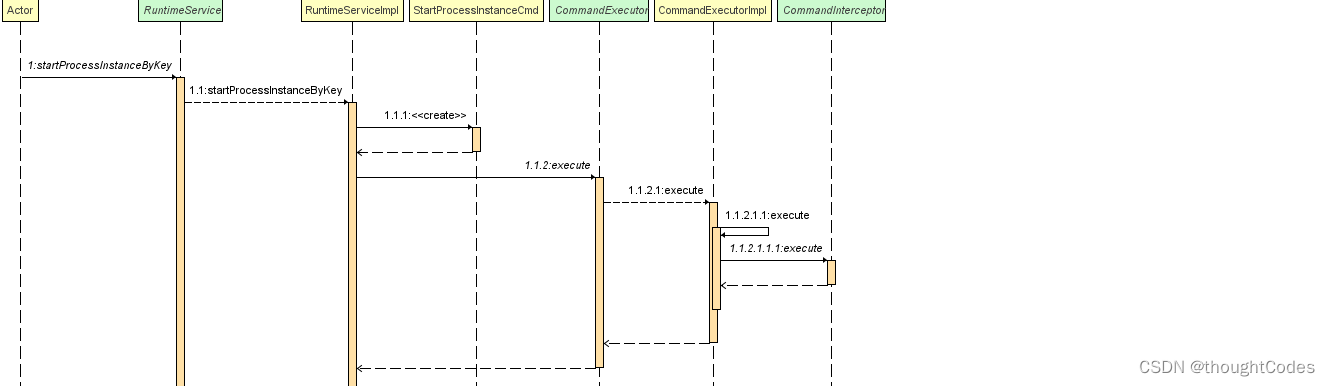
3.ProcessEngines
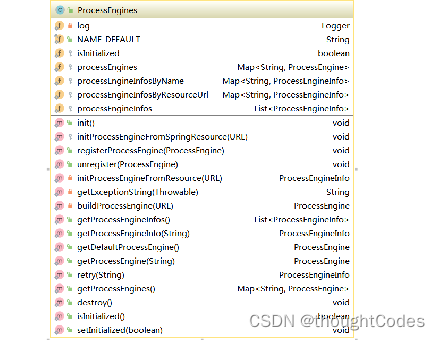
public abstract class ProcessEngines {private static Logger log = LoggerFactory.getLogger(ProcessEngines.class);public static final String NAME_DEFAULT = "default";protected static boolean isInitialized;protected static Map processEngines = new HashMap();protected static Map processEngineInfosByName = new HashMap();protected static Map processEngineInfosByResourceUrl = new HashMap();protected static List processEngineInfos = new ArrayList();/*** Initializes all process engines that can be found on the classpath for resources activiti.cfg.xml (plain Activiti style configuration) and for resources* activiti-context.xml (Spring style configuration).*/public synchronized static void init() {if (!isInitialized()) {if (processEngines == null) {// Create new map to store process-engines if current map is// nullprocessEngines = new HashMap();}ClassLoader classLoader = ReflectUtil.getClassLoader();Enumeration resources = null;try {resources = classLoader.getResources("activiti.cfg.xml");} catch (IOException e) {throw new ActivitiIllegalArgumentException("problem retrieving activiti.cfg.xml resources on the classpath: " + System.getProperty("java.class.path"), e);}// Remove duplicated configuration URL's using set. Some// classloaders may return identical URL's twice, causing duplicate// startupsSet configUrls = new HashSet();while (resources.hasMoreElements()) {configUrls.add(resources.nextElement());}for (Iterator iterator = configUrls.iterator(); iterator.hasNext();) {URL resource = iterator.next();log.info("Initializing process engine using configuration '{}'", resource.toString());initProcessEngineFromResource(resource);}try {resources = classLoader.getResources("activiti-context.xml");} catch (IOException e) {throw new ActivitiIllegalArgumentException("problem retrieving activiti-context.xml resources on the classpath: " + System.getProperty("java.class.path"), e);}while (resources.hasMoreElements()) {URL resource = resources.nextElement();log.info("Initializing process engine using Spring configuration '{}'", resource.toString());initProcessEngineFromSpringResource(resource);}setInitialized(true);} else {log.info("Process engines already initialized");}}protected static void initProcessEngineFromSpringResource(URL resource) {try {Class springConfigurationHelperClass = ReflectUtil.loadClass("org.activiti.spring.SpringConfigurationHelper");Method method = springConfigurationHelperClass.getDeclaredMethod("buildProcessEngine", new Class[] { URL.class });ProcessEngine processEngine = (ProcessEngine) method.invoke(null, new Object[] { resource });String processEngineName = processEngine.getName();ProcessEngineInfo processEngineInfo = new ProcessEngineInfoImpl(processEngineName, resource.toString(), null);processEngineInfosByName.put(processEngineName, processEngineInfo);processEngineInfosByResourceUrl.put(resource.toString(), processEngineInfo);} catch (Exception e) {throw new ActivitiException("couldn't initialize process engine from spring configuration resource " + resource.toString() + ": " + e.getMessage(), e);}}/*** Registers the given process engine. No {@link ProcessEngineInfo} will be available for this process engine. An engine that is registered will be closed when the {@link ProcessEngines#destroy()}* is called.*/public static void registerProcessEngine(ProcessEngine processEngine) {processEngines.put(processEngine.getName(), processEngine);}/*** Unregisters the given process engine.*/public static void unregister(ProcessEngine processEngine) {processEngines.remove(processEngine.getName());}private static ProcessEngineInfo initProcessEngineFromResource(URL resourceUrl) {ProcessEngineInfo processEngineInfo = processEngineInfosByResourceUrl.get(resourceUrl.toString());// if there is an existing process engine infoif (processEngineInfo != null) {// remove that process engine from the member fieldsprocessEngineInfos.remove(processEngineInfo);if (processEngineInfo.getException() == null) {String processEngineName = processEngineInfo.getName();processEngines.remove(processEngineName);processEngineInfosByName.remove(processEngineName);}processEngineInfosByResourceUrl.remove(processEngineInfo.getResourceUrl());}String resourceUrlString = resourceUrl.toString();try {log.info("initializing process engine for resource {}", resourceUrl);ProcessEngine processEngine = buildProcessEngine(resourceUrl);String processEngineName = processEngine.getName();log.info("initialised process engine {}", processEngineName);processEngineInfo = new ProcessEngineInfoImpl(processEngineName, resourceUrlString, null);processEngines.put(processEngineName, processEngine);processEngineInfosByName.put(processEngineName, processEngineInfo);} catch (Throwable e) {log.error("Exception while initializing process engine: {}", e.getMessage(), e);processEngineInfo = new ProcessEngineInfoImpl(null, resourceUrlString, getExceptionString(e));}processEngineInfosByResourceUrl.put(resourceUrlString, processEngineInfo);processEngineInfos.add(processEngineInfo);return processEngineInfo;}private static String getExceptionString(Throwable e) {StringWriter sw = new StringWriter();PrintWriter pw = new PrintWriter(sw);e.printStackTrace(pw);return sw.toString();}private static ProcessEngine buildProcessEngine(URL resource) {InputStream inputStream = null;try {inputStream = resource.openStream();ProcessEngineConfiguration processEngineConfiguration = ProcessEngineConfiguration.createProcessEngineConfigurationFromInputStream(inputStream);return processEngineConfiguration.buildProcessEngine();} catch (IOException e) {throw new ActivitiIllegalArgumentException("couldn't open resource stream: " + e.getMessage(), e);} finally {IoUtil.closeSilently(inputStream);}}/** Get initialization results. */public static List getProcessEngineInfos() {return processEngineInfos;}/*** Get initialization results. Only info will we available for process engines which were added in the {@link ProcessEngines#init()}. No {@link ProcessEngineInfo} is available for engines which were* registered programatically.*/public static ProcessEngineInfo getProcessEngineInfo(String processEngineName) {return processEngineInfosByName.get(processEngineName);}public static ProcessEngine getDefaultProcessEngine() {return getProcessEngine(NAME_DEFAULT);}/*** obtain a process engine by name.** @param processEngineName*          is the name of the process engine or null for the default process engine.*/public static ProcessEngine getProcessEngine(String processEngineName) {if (!isInitialized()) {init();}return processEngines.get(processEngineName);}/*** retries to initialize a process engine that previously failed.*/public static ProcessEngineInfo retry(String resourceUrl) {log.debug("retying initializing of resource {}", resourceUrl);try {return initProcessEngineFromResource(new URL(resourceUrl));} catch (MalformedURLException e) {throw new ActivitiIllegalArgumentException("invalid url: " + resourceUrl, e);}}/*** provides access to process engine to application clients in a managed server environment.*/public static Map getProcessEngines() {return processEngines;}/*** closes all process engines. This method should be called when the server shuts down.*/public synchronized static void destroy() {if (isInitialized()) {Map engines = new HashMap(processEngines);processEngines = new HashMap();for (String processEngineName : engines.keySet()) {ProcessEngine processEngine = engines.get(processEngineName);try {processEngine.close();} catch (Exception e) {log.error("exception while closing {}", (processEngineName == null ? "the default process engine" : "process engine " + processEngineName), e);}}processEngineInfosByName.clear();processEngineInfosByResourceUrl.clear();processEngineInfos.clear();setInitialized(false);}}public static boolean isInitialized() {return isInitialized;}public static void setInitialized(boolean isInitialized) {ProcessEngines.isInitialized = isInitialized;}
}
4.ProcessEngineLifecycleListener
public interface ProcessEngineLifecycleListener {/*** Called right after the process-engine has been built.** @param processEngine*          engine that was built*/void onProcessEngineBuilt(ProcessEngine processEngine);/*** Called right after the process-engine has been closed.** @param processEngine*          engine that was closed*/void onProcessEngineClosed(ProcessEngine processEngine);
}
5.ProcessEngines
public abstract class ProcessEngines {private static Logger log = LoggerFactory.getLogger(ProcessEngines.class);public static final String NAME_DEFAULT = "default";protected static boolean isInitialized;protected static Map processEngines = new HashMap();protected static Map processEngineInfosByName = new HashMap();protected static Map processEngineInfosByResourceUrl = new HashMap();protected static List processEngineInfos = new ArrayList();/*** Initializes all process engines that can be found on the classpath for resources activiti.cfg.xml (plain Activiti style configuration) and for resources* activiti-context.xml (Spring style configuration).*/public synchronized static void init() {if (!isInitialized()) {if (processEngines == null) {// Create new map to store process-engines if current map is// nullprocessEngines = new HashMap();}ClassLoader classLoader = ReflectUtil.getClassLoader();Enumeration resources = null;try {resources = classLoader.getResources("activiti.cfg.xml");} catch (IOException e) {throw new ActivitiIllegalArgumentException("problem retrieving activiti.cfg.xml resources on the classpath: " + System.getProperty("java.class.path"), e);}// Remove duplicated configuration URL's using set. Some// classloaders may return identical URL's twice, causing duplicate// startupsSet configUrls = new HashSet();while (resources.hasMoreElements()) {configUrls.add(resources.nextElement());}for (Iterator iterator = configUrls.iterator(); iterator.hasNext();) {URL resource = iterator.next();log.info("Initializing process engine using configuration '{}'", resource.toString());initProcessEngineFromResource(resource);}try {resources = classLoader.getResources("activiti-context.xml");} catch (IOException e) {throw new ActivitiIllegalArgumentException("problem retrieving activiti-context.xml resources on the classpath: " + System.getProperty("java.class.path"), e);}while (resources.hasMoreElements()) {URL resource = resources.nextElement();log.info("Initializing process engine using Spring configuration '{}'", resource.toString());initProcessEngineFromSpringResource(resource);}setInitialized(true);} else {log.info("Process engines already initialized");}}protected static void initProcessEngineFromSpringResource(URL resource) {try {Class springConfigurationHelperClass = ReflectUtil.loadClass("org.activiti.spring.SpringConfigurationHelper");Method method = springConfigurationHelperClass.getDeclaredMethod("buildProcessEngine", new Class[] { URL.class });ProcessEngine processEngine = (ProcessEngine) method.invoke(null, new Object[] { resource });String processEngineName = processEngine.getName();ProcessEngineInfo processEngineInfo = new ProcessEngineInfoImpl(processEngineName, resource.toString(), null);processEngineInfosByName.put(processEngineName, processEngineInfo);processEngineInfosByResourceUrl.put(resource.toString(), processEngineInfo);} catch (Exception e) {throw new ActivitiException("couldn't initialize process engine from spring configuration resource " + resource.toString() + ": " + e.getMessage(), e);}}/*** Registers the given process engine. No {@link ProcessEngineInfo} will be available for this process engine. An engine that is registered will be closed when the {@link ProcessEngines#destroy()}* is called.*/public static void registerProcessEngine(ProcessEngine processEngine) {processEngines.put(processEngine.getName(), processEngine);}/*** Unregisters the given process engine.*/public static void unregister(ProcessEngine processEngine) {processEngines.remove(processEngine.getName());}private static ProcessEngineInfo initProcessEngineFromResource(URL resourceUrl) {ProcessEngineInfo processEngineInfo = processEngineInfosByResourceUrl.get(resourceUrl.toString());// if there is an existing process engine infoif (processEngineInfo != null) {// remove that process engine from the member fieldsprocessEngineInfos.remove(processEngineInfo);if (processEngineInfo.getException() == null) {String processEngineName = processEngineInfo.getName();processEngines.remove(processEngineName);processEngineInfosByName.remove(processEngineName);}processEngineInfosByResourceUrl.remove(processEngineInfo.getResourceUrl());}String resourceUrlString = resourceUrl.toString();try {log.info("initializing process engine for resource {}", resourceUrl);ProcessEngine processEngine = buildProcessEngine(resourceUrl);String processEngineName = processEngine.getName();log.info("initialised process engine {}", processEngineName);processEngineInfo = new ProcessEngineInfoImpl(processEngineName, resourceUrlString, null);processEngines.put(processEngineName, processEngine);processEngineInfosByName.put(processEngineName, processEngineInfo);} catch (Throwable e) {log.error("Exception while initializing process engine: {}", e.getMessage(), e);processEngineInfo = new ProcessEngineInfoImpl(null, resourceUrlString, getExceptionString(e));}processEngineInfosByResourceUrl.put(resourceUrlString, processEngineInfo);processEngineInfos.add(processEngineInfo);return processEngineInfo;}private static String getExceptionString(Throwable e) {StringWriter sw = new StringWriter();PrintWriter pw = new PrintWriter(sw);e.printStackTrace(pw);return sw.toString();}private static ProcessEngine buildProcessEngine(URL resource) {InputStream inputStream = null;try {inputStream = resource.openStream();ProcessEngineConfiguration processEngineConfiguration = ProcessEngineConfiguration.createProcessEngineConfigurationFromInputStream(inputStream);return processEngineConfiguration.buildProcessEngine();} catch (IOException e) {throw new ActivitiIllegalArgumentException("couldn't open resource stream: " + e.getMessage(), e);} finally {IoUtil.closeSilently(inputStream);}}/** Get initialization results. */public static List getProcessEngineInfos() {return processEngineInfos;}/*** Get initialization results. Only info will we available for process engines which were added in the {@link ProcessEngines#init()}. No {@link ProcessEngineInfo} is available for engines which were* registered programatically.*/public static ProcessEngineInfo getProcessEngineInfo(String processEngineName) {return processEngineInfosByName.get(processEngineName);}public static ProcessEngine getDefaultProcessEngine() {return getProcessEngine(NAME_DEFAULT);}/*** obtain a process engine by name.** @param processEngineName* is the name of the process engine or null for the default process engine.*/public static ProcessEngine getProcessEngine(String processEngineName) {if (!isInitialized()) {init();}return processEngines.get(processEngineName);}/*** retries to initialize a process engine that previously failed.*/public static ProcessEngineInfo retry(String resourceUrl) {log.debug("retying initializing of resource {}", resourceUrl);try {return initProcessEngineFromResource(new URL(resourceUrl));} catch (MalformedURLException e) {throw new ActivitiIllegalArgumentException("invalid url: " + resourceUrl, e);}} 参考资料和推荐阅读
[1].www.activite.org
欢迎阅读,各位老铁,如果对你有帮助,点个赞加个关注呗!~
上一篇:如何安慰朋友和情侣的感情
下一篇:DeepLab V1学习笔记