

【设计模式】 - 创建者模式 - 原型模式
目录标题
- 1. 原型模式
- 1.1 概述
- 1.2 结构
- 1.3 实现
- 1.4 浅克隆
- Demo1:基本类型
- Demo2:引用类型
- 浅克隆总结:
- 1.5 深克隆
- 实现方式1:浅克隆嵌套
- 1. Address类实现Cloneable接口,重写clone方法;
- 2. 在Customer类的clone方法中调用Address类的clone方法
- 实现方式2:序列化
- 总结
1. 原型模式
1.1 概述
用一个已经创建的实例作为原型,通过复制该原型对象来创建一个和原型对象相同的新对象。
1.2 结构
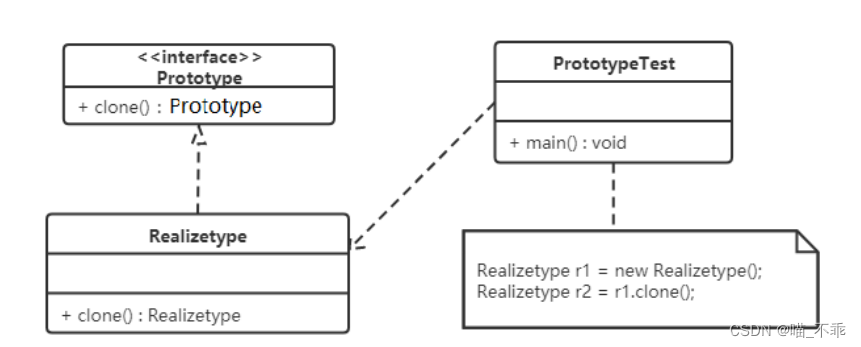
抽象原型类:规定了具体原型对象必须实现的的 clone() 方法。
具体原型类:实现抽象原型类的 clone() 方法,它是可被复制的对象。
访问类:使用具体原型类中的 clone() 方法来复制新的对象。
1.3 实现
在Java中对象的克隆有深克隆和浅克隆之分。有这种区分的原因是Java中分为基本数据类型和引用数据类型,对于不同的数据类型在内存中的存储的区域是不同的。基本数据类型存储在栈中,引用数据类型存储在堆中。
浅克隆:创建一个新对象,对于基本数据类型和String类型属性(拷贝一份该对象并重新分配内存,即产生了新的对象);对于非基本数据类型,浅克隆并不会克隆这些属性(即不会为这些属性分配内存,仍指向原有属性所指向的对象的内存地址)。
深克隆:创建一个新对象,属性中引用的其他对象也会被克隆,不再指向原有对象地址。
总结:浅克隆中由于除8中数据类型和String类型外的其他类型的属性不会被克隆,因此当通过新对象对这些属性进行修改时,原对象的属性也会同时改变。而深克隆则已经对这些属性重新分配内存,所以当通过新对象对这些属性进行修改时,原对象的属性不会改变。
Java中的Object类中提供了 clone() 方法来实现浅克隆。 Cloneable 接口是上面的类图中的抽象原型类,而实现了Cloneable接口的子实现类就是具体的原型类。代码如下:
Realizetype(具体的原型类):
public class Realizetype implements Cloneable {public Realizetype() {System.out.println("具体的原型对象创建完成!");}@Overrideprotected Realizetype clone() throws CloneNotSupportedException {System.out.println("具体原型复制成功!");return (Realizetype) super.clone();}
}
PrototypeTest(测试访问类):
public class PrototypeTest {public static void main(String[] args) throws CloneNotSupportedException{Realizetype r1 = new Realizetype();Realizetype r2 = r1.clone();System.out.println("对象r1和r2是同一个对象?" + (r1 == r2)); //ture}
}
1.4 浅克隆
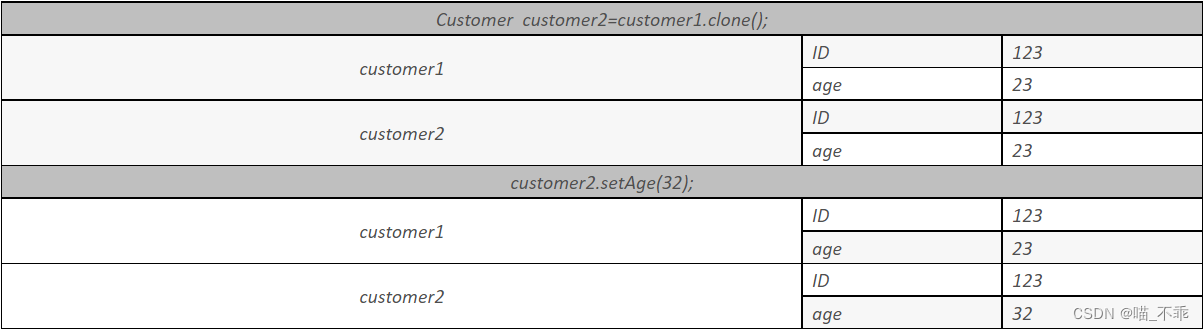
Demo1:基本类型
Demo2:引用类型
public static void main(String[] args) throws CloneNotSupportedException {  Address address = new Address("CH" , "SD" , "QD");  Customer customer1 = new Customer(1 , 23 , address);  Customer customer2 = customer1.clone();  customer2.getAddress().setCity("JN");  customer2.setID(2);  System.out.println("customer1:"+customer1.toString());  System.out.println("customer2:"+customer2.toString());  }
}
class Customer implements Cloneable{  public int ID;  public int age;  public Address address;  //get/set...@Override  public Customer clone() throws CloneNotSupportedException {  return (Customer) super.clone();  }
}
class Address{  private String country;  private String province;  private String city;  //get/set...
}
customer1:Customer [ID=1, age=23, address=Address [country=CH, province=SD, city=JN]]
customer2:Customer [ID=2, age=23, address=Address [country=CH, province=SD, city=JN]]
customer2修改了id后没有影响到customer1,但是修改了customer2的address属性的city值为JN后,发现customer1的address值也发生了改变。这样就没有达到完全复制、相互之间完全没有影响的目的。这样就需要进行深克隆。
浅克隆总结:
浅克隆对于一个只含有基本数据类型的类来说使用clone方法,是完全没有问题的。
1.5 深克隆
深克隆与浅克隆的区别就是,浅克隆不会克隆原对象中的引用类型,仅仅拷贝了引用类型的指向。深克隆则拷贝了所有。也就是说深克隆能够做到原对象和新对象之间完全没有影响。
而深克隆的实现就是在引用类型所在的类实现Cloneable接口,并使用public访问修饰符重写clone方法。
实现方式1:浅克隆嵌套
1. Address类实现Cloneable接口,重写clone方法;
@Override
public Address clone() throws CloneNotSupportedException {  return (Address) super.clone();
}
2. 在Customer类的clone方法中调用Address类的clone方法
@Override
public Customer clone() throws CloneNotSupportedException {  Customer customer = (Customer) super.clone();  customer.address = address.clone();  return customer;
}
customer1:Customer[ID=1, age=23, address=Address [country=CH, province=SD, city=QD]]
customer2:Customer[ID=2, age=23, address=Address [country=CH, province=SD, city=JN]]
发现customer2无论如何修改,customer1都没有受到影响。
实现方式2:序列化
实现深克隆的另一种方法就是使用序列化,将对象写入到流中,这样对象的内容就变成了字节流,也就不存在什么引用了。然后读取字节流反序列化为对象就完成了完全的复制操作了。
Address address = new Address("CH" , "SD" , "QD");
Customer customer1 = new Customer(1 , 23 , address);
Customer customer2 = (Customer) cloneObject(customer1);
customer2.getAddress().setCity("JN");
customer2.setID(2);
System.out.println("customer1:"+customer1.toString());
System.out.println("customer2:"+customer2.toString());
public static Object cloneObject(Object obj) throws IOException, ClassNotFoundException{  ByteArrayOutputStream byteOut = new ByteArrayOutputStream();  ObjectOutputStream out = new ObjectOutputStream(byteOut);  out.writeObject(obj);   ByteArrayInputStream byteIn = new ByteArrayInputStream(byteOut.toByteArray());  ObjectInputStream in =new ObjectInputStream(byteIn);  return in.readObject();
}
customer1:Customer [ID=1, age=23, address=Address [country=CH, province=SD, city=QD]]
customer2:Customer [ID=2, age=23, address=Address [country=CH, province=SD, city=JN]]
总结
- 浅克隆:只复制基本类型的数据,引用类型的数据只复制了引用的地址,引用的对象并没有复制,在新的对象中修改引用类型的数据会影响原对象中的引用。
- 深克隆1:是在引用类型的类中也实现了clone,是clone的嵌套,复制后的对象与原对象之间完全不会影响。
- 深克隆2:使用序列化也能完成深复制的功能:对象序列化后写入流中,此时也就不存在引用什么的概念了,再从流中读取,生成新的对象,新对象和原对象之间也是完全互不影响的。
来源:深克隆和浅克隆:https://blog.csdn.net/weixin_44351616/article/details/125146241
https://www.bilibili.com/video/BV1Np4y1z7BU?p=49&spm_id_from=pageDriver&vd_source=b901ef0e9ed712b24882863596eab0ca