
(十一)手写简单的Spring框架
文章目录
- 第一步:搭建环境
- 第二步:准备好要管理的Bean
- 第三步:准备myspring.xml配置文件
- 第四步:编写MyApplicationContext接口
- 第五步:编写MyClassPathXmlApplicationContext
- 第六步:采用Map集合存储Bean
- 第七步:解析配置文件实例化所有Bean
- 第八步:给Bean的属性赋值
- 测试MySpring框架
上一篇:(十)Spring之回顾反射机制
Spring IoC容器的实现原理:工厂模式 + 解析XML + 反射机制。
第一步:搭建环境
采用Maven方式新建模块:取名MySpring
引入dom4j和jaxen的依赖,因为要使用它解析XML文件,还有junit依赖和log4j2的依赖,方便测试。
log4j2.xml文件放到类路径下。
org.dom4j dom4j 2.1.3 jaxen jaxen 1.2.0 junit junit 4.13.2 test org.apache.logging.log4j log4j-core 2.19.0 org.apache.logging.log4j log4j-slf4j2-impl 2.19.0 第二步:准备好要管理的Bean
准备好我们要管理的Bean,这些Bean只是为了方便测试,也就是说这些Bean在将来开发完框架之后是要删除。
创建User类:
public class User {private String name;private int age;public void setName(String name) {this.name = name;}public void setAge(int age) {this.age = age;}@Overridepublic String toString() {return "User{" +"name='" + name + '\'' +", age=" + age +'}';}
}
创建UserDao类:
public class UserDao {public void insert(){System.out.println("正在新增用户信息。。。");}
}
创建UserDao类:
public class UserService {private UserDao userDao;public void setUserDao(UserDao userDao) {this.userDao = userDao;}public void save(){userDao.insert();}
}
第三步:准备myspring.xml配置文件
注意这个配置文件也是框架使用者提供,将来开发完框架之后是要删除。
使用value给简单属性赋值。使用ref给非简单属性赋值。
第四步:编写MyApplicationContext接口
使用Spring的时候我们第一个要做的是获取Spring容器对象,是一个ApplicationContext接口,所以我们也提供这样一个接口,这个接口将来是要通过getBean方法获取Bean的,所以我们提供这样一个方法。
/*** MySpring框架应用上下文*/
public interface MyApplicationContext {/*** 根据Bean的名称获取对应的Bean对象* @param beanName myspring配置文件中bean标签的id* @return 对应的Bean单例对象*/Object getBean(String beanName);
}
第五步:编写MyClassPathXmlApplicationContext
使用Spring的时候获取Spring容器对象是通过new ClassPathXmlApplicationContext得到的,这个类ApplicationContext接口的实现类。要加载类路径下的Spring配置文件。
所以我们创建MyClassPathXmlApplicationContext类继承MyApplicationContext接口。
public class MyClassPathXmlApplicationContext implements MyApplicationContext{@Overridepublic Object getBean(String beanName) {return null;}
}
第六步:采用Map集合存储Bean
Spring是提供三级缓存存储不同时期的Bean,我们不用那么麻烦,采用一个Map集合存储Bean实例。Map集合的key存储bean的id,value存储Bean实例。Map
在MyClassPathXmlApplicationContext类中添加Map
并且在MyClassPathXmlApplicationContext类中添加构造方法,该构造方法的参数接收myspring.xml文件。
同时实现getBean方法。
public class ClassPathXmlApplicationContext implements ApplicationContext{/*** 存储bean的Map集合*/private Map singletonObjects = new HashMap<>();/*** 在该构造方法中,解析myspring.xml文件,创建所有的Bean实例,并将Bean实例存放到Map集合中。* @param resource 配置文件路径(要求在类路径当中)*/public ClassPathXmlApplicationContext(String configLocation) {}@Overridepublic Object getBean(String beanName) {return singletonObjects.get(beanName);}
}
第七步:解析配置文件实例化所有Bean
在MyClassPathXmlApplicationContext的构造方法中解析配置文件,获取所有bean的类名,通过反射机制调用无参数构造方法创建Bean。并且将Bean对象存放到Map集合中。
public MyClassPathXmlApplicationContext(String configLocation) {try {//1.使用Dom4j创建reader对象SAXReader reader = new SAXReader();//2.通过类加载器获取SqlMapper的配置文件输入流InputStream myspring_stream = ClassLoader.getSystemClassLoader().getResourceAsStream(configLocation);//3.读XML文件,返回一个文档对象documentDocument document = reader.read(myspring_stream);//4.对标签进行处理//(1)获取所有的bean标签List nodes = document.selectNodes("//bean");//(2)对bean标签进行遍历,创建对象曝光到Map集合中nodes.forEach(node -> {try {//向下转型,因为Element有更多的方法 Element 继承了 Branch 又继承了 Node ,Node方法比较少。Element beanElt = (Element) node;//获取Bean的idString id = beanElt.attributeValue("id");//获取class属性值String className = beanElt.attributeValue("class");logger.info("beanName:" + id);//使用log4j2记录logger.info("beanClassName:" + className);//通过反射机制创建对象,将其放到Map集合中Class aClass = Class.forName(className);Constructor defaultCon = aClass.getDeclaredConstructor();Object beanObj = defaultCon.newInstance();//将bean曝光,加入Map集合singletonObjects.put(id,beanObj);logger.info(singletonObjects.toString());} catch (Exception e) {e.printStackTrace();}});} catch (Exception e) {e.printStackTrace();}
}
第八步:给Bean的属性赋值
通过反射机制调用set方法,给Bean的属性赋值。
继续在MyClassPathXmlApplicationContext构造方法中编写代码。
//(3)再次对bean标签进行遍历,这次主要对bean进行赋值nodes.forEach(node -> {try {//向下转型,因为Element有更多的方法 Element 继承了 Branch 又继承了 Node ,Node方法比较少。Element beanElt = (Element) node;//获取Bean的idString id = beanElt.attributeValue("id");//获取class属性值String className = beanElt.attributeValue("class");//获取ClassClass aClass = Class.forName(className);//获取该bean标签下所有的属性property标签List propertys = beanElt.elements("property");//遍历property标签propertys.forEach(property ->{try {//获取属性名String propertyName = property.attributeValue("name");logger.info(propertyName);//获取set方法名String setMethodName = "set" + propertyName.toUpperCase().charAt(0) + propertyName.substring(1);//获取属性类型Field field = aClass.getDeclaredField(propertyName);//获取set方法Method setMethod = aClass.getDeclaredMethod(setMethodName,field.getType());//调用set方法//这里的具体值有可能是value或者ref,需要进行判断String value = property.attributeValue("value");String ref = property.attributeValue("ref");Object actualValue = null;if (value != null) {//简单类型//这里比较麻烦,因为获取到的value的是字符串,需要根据属性类型转换成对应的类型//为了程序简单化,我们定义8种基本类型以及对应的包装类,加上String为简单类型//首先获取属性类型名的简称String propertySimpleName = field.getType().getSimpleName();switch (propertySimpleName){case "byte":actualValue = Byte.parseByte(value);break;case "short":actualValue = Short.parseShort(value);break;case "int":actualValue = Integer.parseInt(value);break;case "long":actualValue = Long.parseLong(value);break;case "float":actualValue = Float.parseFloat(value);break;case "double":actualValue = Double.parseDouble(value);break;case "boolean":actualValue = Boolean.parseBoolean(value);break;case "char":actualValue = value.charAt(0);break;case "Byte":actualValue = Byte.valueOf(value);break;case "Short":actualValue = Short.valueOf(value);break;case "Integer":actualValue = Integer.valueOf(value);break;case "Long":actualValue = Long.valueOf(value);break;case "Float":actualValue = Float.valueOf(value);break;case "Double":actualValue = Double.valueOf(value);break;case "Boolean":actualValue = Boolean.valueOf(value);break;case "Character":actualValue = Character.valueOf(value.charAt(0));break;case "String":actualValue = value;break;}setMethod.invoke(singletonObjects.get(id), actualValue);}if (ref != null) {//非简单类型setMethod.invoke(singletonObjects.get(id), singletonObjects.get(ref));}} catch (Exception e) {e.printStackTrace();}});} catch (Exception e) {e.printStackTrace();}});
测试MySpring框架
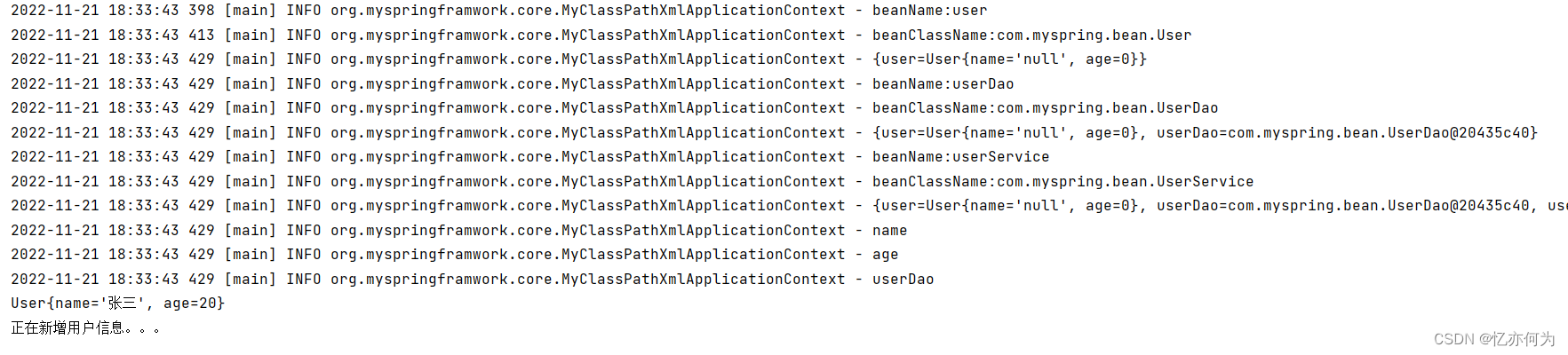
@Testpublic void testMySpring(){MyApplicationContext myApplicationContext = new MyClassPathXmlApplicationContext("myspring.xml");Object user = myApplicationContext.getBean("user");System.out.println(user);UserService userService = ((UserService) myApplicationContext.getBean("userService"));userService.save();}
测试完毕,运行成功