

YUV图像格式转换方法实践
一 I420转NV12
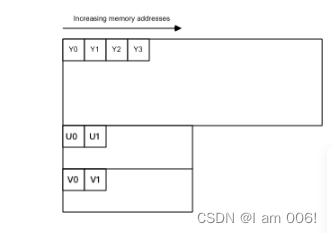
1.I420格式
(1)I420是每四个Y共用一组UV,如果一帧I420图像宽带是width,高度是height,1个像素占1个字节,那么共有width✖height个Y,U和V都是width✖height / 4个,因此一帧I420图像占用字节数是width✖height✖3/2。
(2)I420是先存完所有Y后,在接着存完U,最后存V。
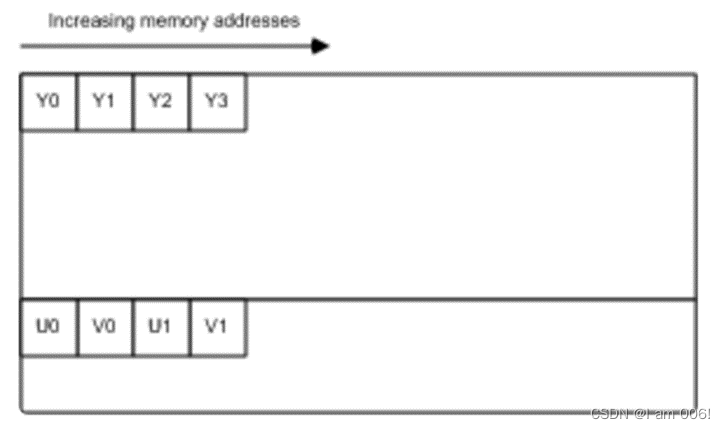
2.NV12格式
(1)NV12是每四个Y共用一组UV,如果一帧NV12图像宽带是width,高度是height,1个像素占1个字节,那么共有width✖height个Y,U和V都是width✖height / 4个,因此一帧I420图像占用字节数是width✖height✖3/2。
(2)NV12是先存完所有Y后,随后U、V交替存储。
3.转换方法
(1)将一帧I420图像中所有Y拷贝到NV12数据区,将一帧I420图像中所有U和V交替拷贝到NV12数据区。
(2)代码:
bool convert_i420_nv12(const char *i420_file_path, size_t width, size_t height, const char *nv12_file_path) {if (!i420_file_path || !nv12_file_path) {return false;}FILE *fp = fopen(i420_file_path, "rb");if (!fp) {return false;}fseek(fp, 0, SEEK_END);size_t file_size = ftell(fp);fseek(fp, 0, SEEK_SET);size_t y_size = width * height;size_t uv_size = y_size / 4;if (file_size != (y_size + uv_size * 2)) {fclose(fp);return false;}char *i420_content = (char *)malloc(sizeof(char) * file_size);if (!i420_content) {fclose(fp);return false;}if (file_size != fread(i420_content, 1, file_size, fp)) {free(i420_content);fclose(fp);return false;}fclose(fp);// convert i420 to nv12char *nv12_content = (char *)malloc(sizeof(char) * file_size);if (!nv12_content) {free(i420_content);return false;}// copy y channelmemcpy(nv12_content, i420_content, y_size);// copy uv channelchar *i420_u_base = i420_content + y_size;char *i420_v_base = i420_u_base + uv_size;char *nv12_uv_base = nv12_content + y_size;int i = 0, j = 0;for (;i < uv_size;i++) {nv12_uv_base[j] = i420_u_base[i];nv12_uv_base[j + 1] = i420_v_base[i];j += 2;}free(i420_content);fp = fopen(nv12_file_path, "wb");if (!fp) {free(nv12_content);return false;}if (file_size != fwrite(nv12_content, 1, file_size, fp)) {free(nv12_content);fclose(fp);return false;}free(nv12_content);fclose(fp);return true;
}
二 I420转NV21
1.NV21格式
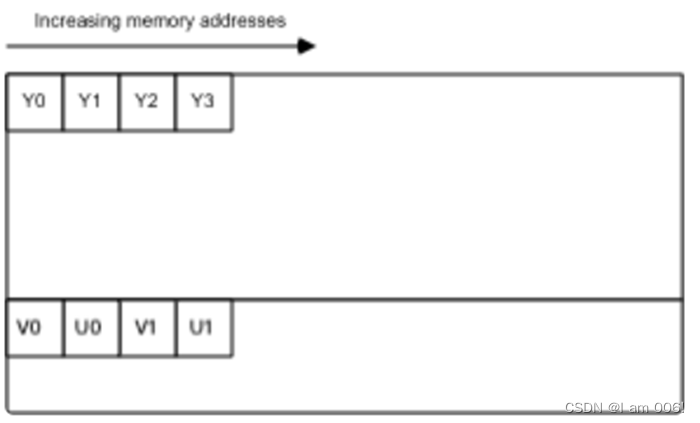
NV21内存布局基本与NV12类似,只是将NV12中U和V次序互换,如下所示:
2.转换代码
bool convert_i420_nv21(const char *i420_file_path, size_t width, size_t height, const char *nv21_file_path) {if (!i420_file_path || !nv21_file_path) {return false;}FILE *fp = fopen(i420_file_path, "rb");if (!fp) {return false;}fseek(fp, 0, SEEK_END);size_t file_size = ftell(fp);fseek(fp, 0, SEEK_SET);size_t y_size = width * height;size_t uv_size = y_size / 4;if (file_size != (y_size + uv_size * 2)) {fclose(fp);return false;}char *i420_content = (char *)malloc(sizeof(char) * file_size);if (!i420_content) {fclose(fp);return false;}if (file_size != fread(i420_content, 1, file_size, fp)) {free(i420_content);fclose(fp);return false;}fclose(fp);// convert i420 to nv21char *nv21_content = (char *)malloc(sizeof(char) * file_size);if (!nv21_content) {free(i420_content);return false;}// copy y channelmemcpy(nv21_content, i420_content, y_size);// copy uv channelchar *i420_u_base = i420_content + y_size;char *i420_v_base = i420_u_base + uv_size;char *nv21_uv_base = nv21_content + y_size;int i = 0, j = 0;for (;i < uv_size;i++) {nv21_uv_base[j] = i420_v_base[i];nv21_uv_base[j + 1] = i420_u_base[i];j += 2;}free(i420_content);fp = fopen(nv21_file_path, "wb");if (!fp) {free(nv21_content);return false;}if (file_size != fwrite(nv21_content, 1, file_size, fp)) {free(nv21_content);fclose(fp);return false;}free(nv21_content);fclose(fp);return true;
}
三 UYVY转NV12
1.UYVY格式
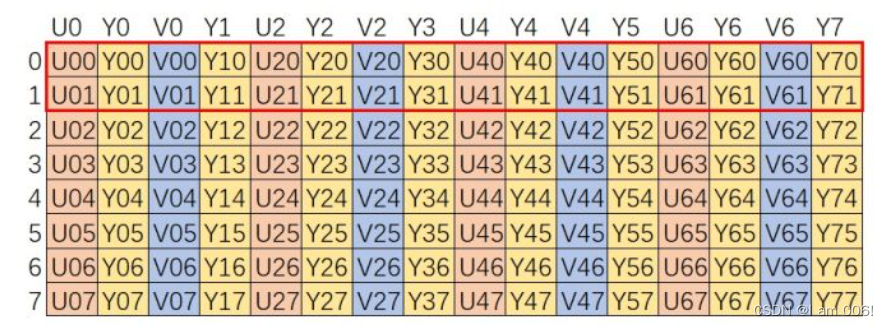
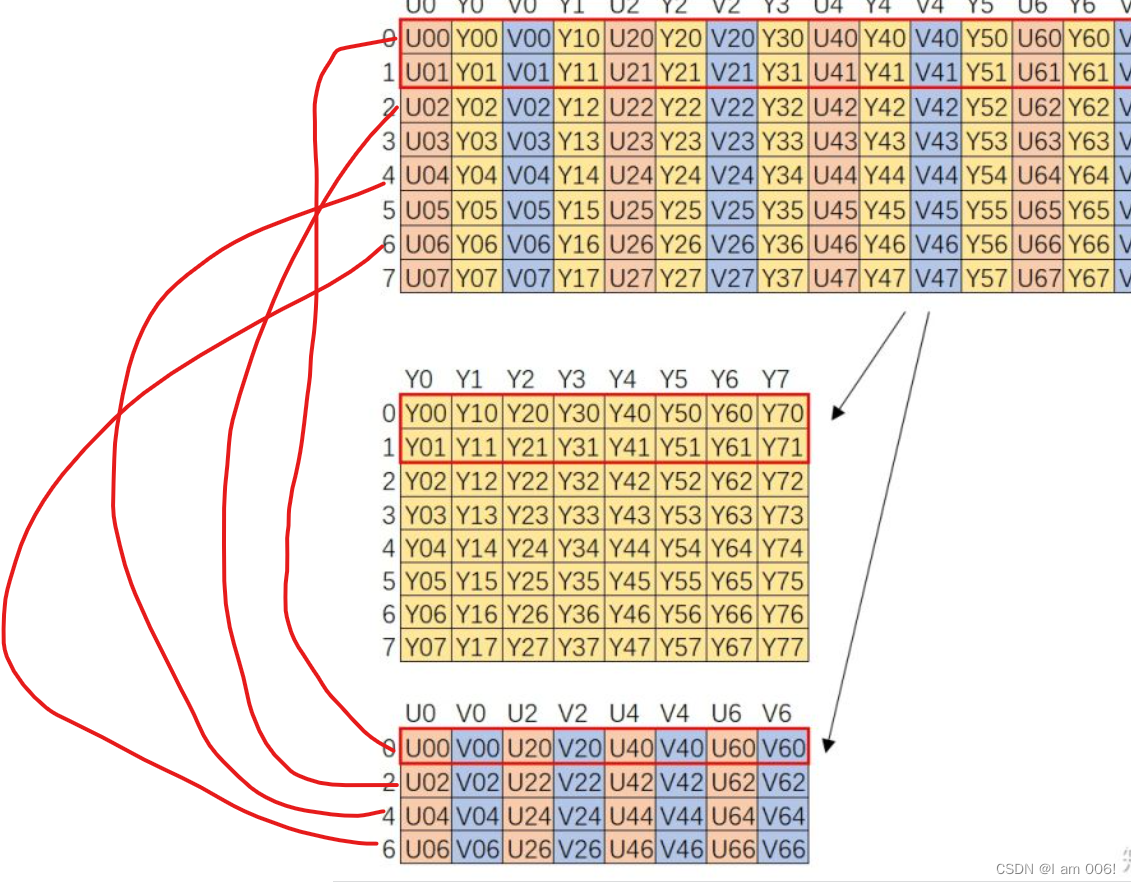
(1)UYVY是每两个Y共用一组UV,如果一帧UYVY图像宽带是width,高度是height,1个像素占1个字节,那么共有width✖height个Y,U和V都是width✖height / 2个,因此一帧I420图像占用字节数是width✖height✖2。
(2)UYVY是每4个像素中,2个Y共用一组UV,一行像素数是width * 2,如下所示:
2.转换方法
(1)将一帧UYVY图像中所有Y存入NV12图像的缓存区,隔行存入相应的U和V,如下所示:
(2)转换代码:
bool convert_uyvy_nv12(const char *uyvy_file_path, size_t width, size_t height, const char *nv12_file_path) {if (!uyvy_file_path || !nv12_file_path) {return false;}FILE *fp = fopen(uyvy_file_path, "rb");if (!fp) {return false;}fseek(fp, 0, SEEK_END);size_t file_size = ftell(fp);fseek(fp, 0, SEEK_SET);size_t frame_size = width * height * 2;if (file_size != frame_size) {fclose(fp);return false;}char *uyvy_content = (char *)malloc(sizeof(char) * file_size);if (!uyvy_content) {fclose(fp);return false;}if (file_size != fread(uyvy_content, 1, file_size, fp)) {free(uyvy_content);fclose(fp);return false;}fclose(fp);// convert uyvy to nv12frame_size = width * height * 3 / 2;char *nv12_content = (char *)malloc(sizeof(char) * frame_size);if (!nv12_content) {free(uyvy_content);return false;}size_t y_size = width * height;size_t pixels_in_a_row = width * 2;char *nv12_y_ptr = nv12_content;char *nv12_uv_ptr = nv12_content + y_size;int lines = 0;for (int i = 0;i < file_size;i += 4) {// copy y channel*nv12_y_ptr++ = uyvy_content[i + 1];*nv12_y_ptr++ = uyvy_content[i + 3];if (0 == i % pixels_in_a_row) {++lines;}if (lines % 2) {       // extract the UV value of odd rows// copy uv channel*nv12_uv_ptr++ = uyvy_content[i];*nv12_uv_ptr++ = uyvy_content[i + 2];}}free(uyvy_content);fp = fopen(nv12_file_path, "wb");if (!fp) {free(nv12_content);return false;}if (frame_size != fwrite(nv12_content, 1, frame_size, fp)) {free(nv12_content);fclose(fp);return false;}free(nv12_content);fclose(fp);return true;
}
四 UYVY转NV21
方法与转NV12类似,代码如下:
bool convert_uyvy_nv21(const char *uyvy_file_path, size_t width, size_t height, const char *nv21_file_path) {if (!uyvy_file_path || !nv21_file_path) {return false;}FILE *fp = fopen(uyvy_file_path, "rb");if (!fp) {return false;}fseek(fp, 0, SEEK_END);size_t file_size = ftell(fp);fseek(fp, 0, SEEK_SET);size_t frame_size = width * height * 2;if (file_size != frame_size) {fclose(fp);return false;}char *uyvy_content = (char *)malloc(sizeof(char) * file_size);if (!uyvy_content) {fclose(fp);return false;}if (file_size != fread(uyvy_content, 1, file_size, fp)) {free(uyvy_content);fclose(fp);return false;}fclose(fp);// convert uyvy to nv12frame_size = width * height * 3 / 2;char *nv21_content = (char *)malloc(sizeof(char) * frame_size);if (!nv21_content) {free(uyvy_content);return false;}size_t y_size = width * height;size_t pixels_in_a_row = width * 2;char *nv21_y_ptr = nv21_content;char *nv21_uv_ptr = nv21_content + y_size;int lines = 0;for (int i = 0;i < file_size;i += 4) {// copy y channel*nv21_y_ptr++ = uyvy_content[i + 1];*nv21_y_ptr++ = uyvy_content[i + 3];if (0 == i % pixels_in_a_row) {++lines;}if (lines % 2) {       // extract the UV value of odd rows// copy uv channel*nv21_uv_ptr++ = uyvy_content[i + 2];*nv21_uv_ptr++ = uyvy_content[i];}}free(uyvy_content);fp = fopen(nv21_file_path, "wb");if (!fp) {free(nv21_content);return false;}if (frame_size != fwrite(nv21_content, 1, frame_size, fp)) {free(nv21_content);fclose(fp);return false;}free(nv21_content);fclose(fp);return true;
}
五 编译及测试
1.编译:使用g++编译
2.github:GitHub - wangzhicheng2013/common_utility
上一篇:一篇文章带你搞懂使用PID
下一篇:伟大的()有几种组词