

2.Conv2d实现
创始人
2024-03-02 08:30:58
[C++ 基于Eigen库实现CRN前向推理]
第二部分:Conv2d实现
- 前言:(Eigen库使用记录)
- 第一部分:WavFile.class (实现读取wav/pcm,实现STFT)
- 第二部分:Conv2d实现
- 第三部分:TransposedConv2d实现 (mimo,padding,stride,dilation,kernel,outpadding)
- 第四部分:NonLinearity (Sigmoid,Tanh,ReLU,ELU,Softplus)
- 第五部分:LSTM
- GITHUB仓库
1. Conv2d介绍
1.1 参数介绍
这是pytorch官方源码
def __init__(self,in_channels: int,out_channels: int,kernel_size: _size_2_t,stride: _size_2_t = 1,padding: _size_2_t = 0,dilation: _size_2_t = 1,groups: int = 1,bias: bool = True,padding_mode: str = 'zeros' # TODO: refine this type):
-
in_channels:网络输入的通道数,简单理解为每个输入样本包含多个个FeatureMap。
-
out_channels:网络输出的通道数。即卷积核的个数
-
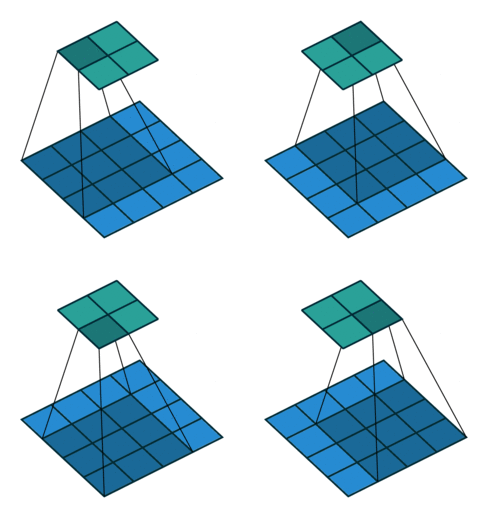
kernel_size:卷积核的大小,如果该参数是一个整数q,那么卷积核的大小是qXq。
至此,一个简单的卷积如图
-
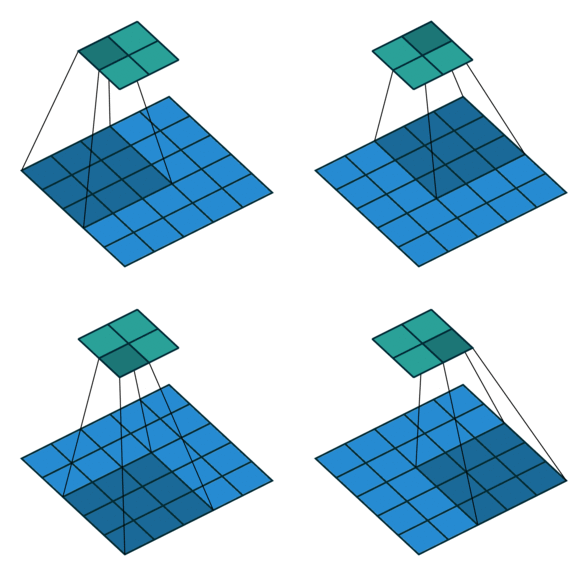
stride:步长。是卷积过程中移动的步长。默认情况下是1。一般卷积核在输入图像上的移动是自左至右,自上至下。如果参数是一个整数那么就默认在水平和垂直方向都是该整数。如果参数是stride=(2, 1),2代表着高(h)进行步长为2,1代表着宽(w)进行步长为1。
加入步长后,当步长为2时,卷积如图:
-
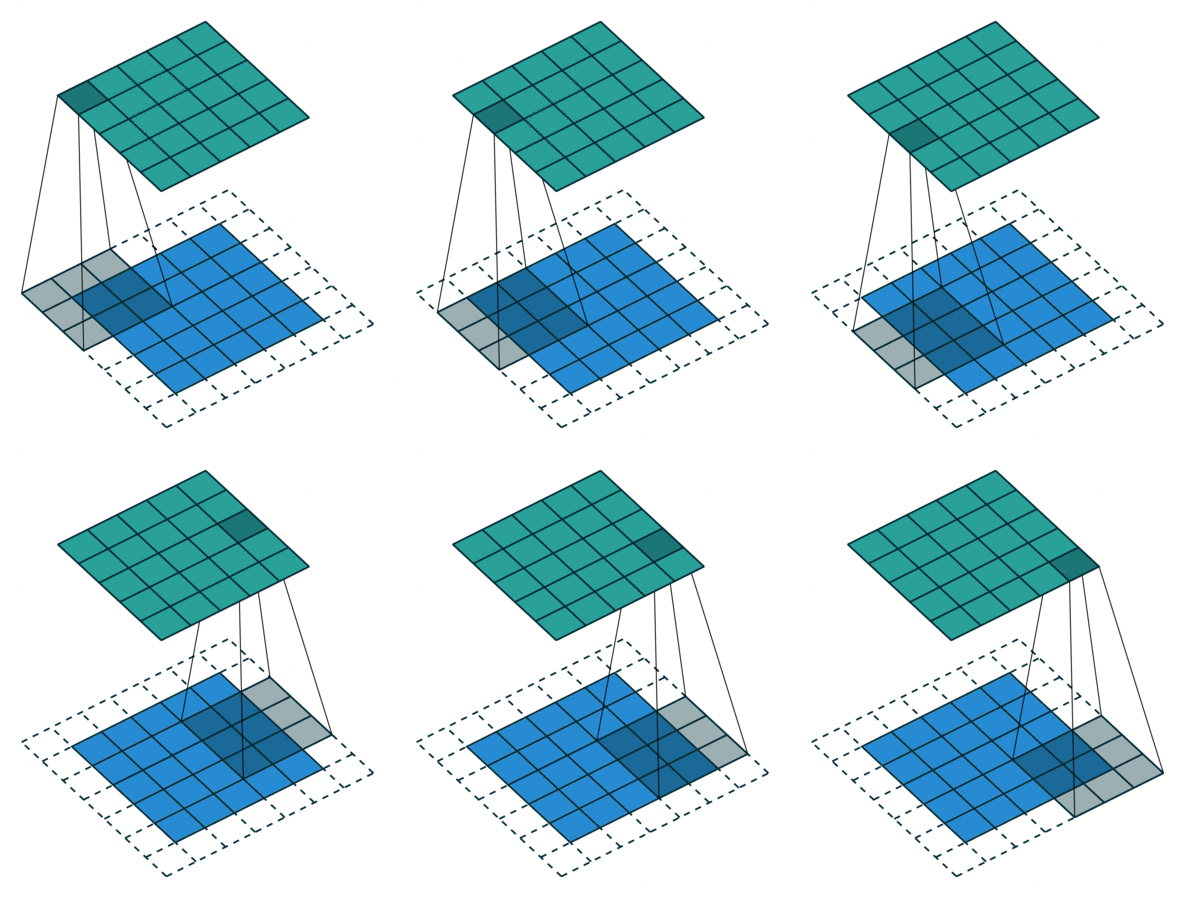
padding:填充,默认是0值填充。改参数指定的是在边缘填充多少行或列的0值
如padding为1时,卷积如图
-
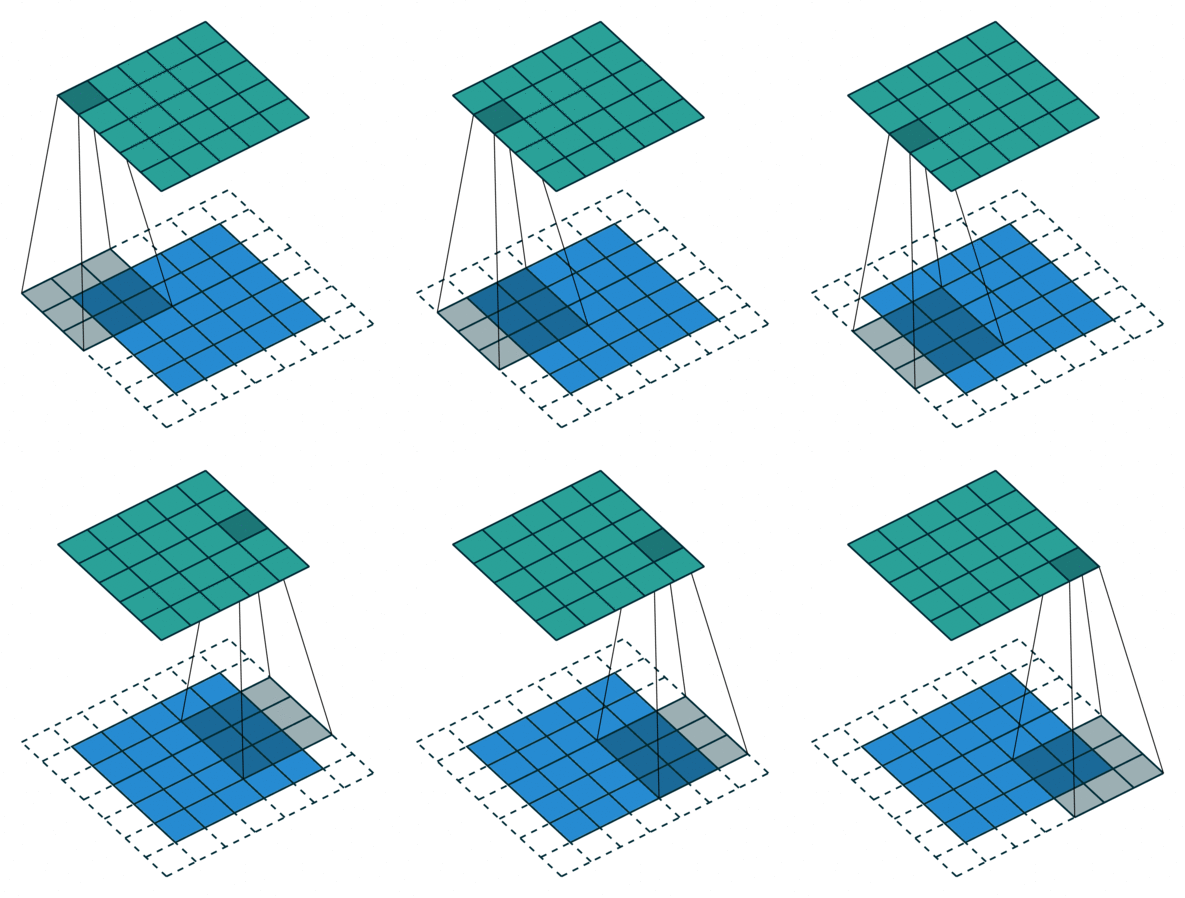
dilation:扩张。一般情况下,卷积核与输入图像对应的位置之间的计算是相同尺寸的,也就是说卷积核的大小是3X3,那么它在输入图像上每次作用的区域是3X3,这种情况下dilation=0。当dilation=1时,表示的是下图这种情况。
1.2 python实现
2. 基于Eigen的C++实现
2.1 Layer_Conv2d.h
//
// Created by Koer on 2022/10/31.
//#ifndef CRN_LAYER_CONV2D_H
#define CRN_LAYER_CONV2D_H#include "vector"
#include "mat.h"
#include "Eigen"
#include "tuple"#include "Eigen/CXX11/Tensor"class Layer_Conv2d {
public:Layer_Conv2d();Layer_Conv2d(int64_t in_ch, int64_t out_ch, std::pair kernel = std::make_pair(1, 1),std::pair stride = std::make_pair(1, 1),std::pair dilation = std::make_pair(1, 1),std::pair padding = std::make_pair(0, 0));void LoadState(MATFile *pmFile, const std::string &state_preffix);void LoadTestState();Eigen::Tensor forward(Eigen::Tensor &input);private:int64_t in_channels;int64_t out_channels;std::pair kernel_size;std::pair stride;std::pair dilation;std::pair padding;Eigen::Tensor weights;Eigen::Tensor bias;};#endif //CRN_LAYER_CONV2D_H
2.2 Layer_Conv2d.cpp
//
// Created by Koer on 2022/10/31.
//#include "iostream"
#include "../include/Layer_Conv2d.h"Layer_Conv2d::Layer_Conv2d() {this->in_channels = 1;this->out_channels = 1;this->kernel_size = std::make_pair(1, 1);this->stride = std::make_pair(1, 1);this->padding = std::make_pair(0, 0);
}Layer_Conv2d::Layer_Conv2d(int64_t in_ch, int64_t out_ch,std::pair kernel,std::pair stride,std::pair dilation,std::pair padding) {/* code */this->in_channels = in_ch;this->out_channels = out_ch;this->kernel_size = kernel;this->stride = stride;this->dilation = dilation;this->padding = padding;
}void Layer_Conv2d::LoadState(MATFile *pmFile, const std::string &state_preffix) {std::string weight_name = state_preffix + "_weight";std::string bias_name = state_preffix + "_bias";// Read weightmxArray *pa = matGetVariable(pmFile, weight_name.c_str());auto *values = (float_t *) mxGetData(pa);// First Dimension  eg.(16,1,2,3)  ===> M=16long long dim1 = mxGetM(pa);// Rest Total Dimension eg.(16,1,2,3) ===>N = 1 * 2 * 3 = 6long long dim2 = mxGetN(pa);dim2 = dim2 / this->kernel_size.first / this->kernel_size.second;this->weights.resize(dim1, dim2, this->kernel_size.first, this->kernel_size.second);int idx = 0;for (int i = 0; i < this->kernel_size.second; i++) {for (int j = 0; j < this->kernel_size.first; j++) {for (int k = 0; k < dim2; k++) {for (int l = 0; l < dim1; l++) {this->weights(l, k, j, i) = values[idx++];}}}}// std::cout << this->weights << std::endl;// Read biaspa = matGetVariable(pmFile, bias_name.c_str());values = (float_t *) mxGetData(pa);dim1 = mxGetM(pa);dim2 = mxGetN(pa);this->bias.resize(dim1, dim2);idx = 0;for (int i = 0; i < dim2; i++) {for (int j = 0; j < dim1; j++) {this->bias(j, i) = values[idx++];}}// std::cout << this->bias << std::endl;// std::cout << " Finish Loading State of " + state_preffix << std::endl;
}void Layer_Conv2d::LoadTestState() {Eigen::Tensor w(this->out_channels, this->in_channels, this->kernel_size.first,this->kernel_size.second);w.setConstant(1.0);this->weights = w;Eigen::Tensor b(1, this->out_channels);b.setConstant(0.0);this->bias = b;
}Eigen::Tensor Layer_Conv2d::forward(Eigen::Tensor &input) {const Eigen::Tensor::Dimensions &dim_inp = input.dimensions();/* Sequence channel × T × F */size_t pad_size_time = this->padding.first;size_t pad_size_freq = this->padding.second;int64_t batch = dim_inp[0], C_in = dim_inp[1], H_in = dim_inp[2], W_in = dim_inp[3];int64_t H_pad = H_in + pad_size_time * 2;int64_t W_pad = W_in + pad_size_freq * 2;/* padding tensor */Eigen::Tensor padded_input = Eigen::Tensor(batch, C_in, H_pad, W_pad);padded_input.setZero();padded_input.slice(Eigen::array{0, 0, pad_size_time, pad_size_freq}, dim_inp) = input;/* output shape */int64_t H_out = (H_pad - this->dilation.first * (this->kernel_size.first - 1) - 1) / this->stride.first + 1;int64_t W_out = (W_pad - this->dilation.second * (this->kernel_size.second - 1) - 1) / this->stride.second + 1;Eigen::Tensor output = Eigen::Tensor(batch, this->out_channels, H_out, W_out);output.setZero();/* params* region: tmp storage of map to be convolved* kernel: tmp storage of kernel of the out_channels idx_outc* tmp_res: tmp storage of res (convolve all in_channels and sum up)* dim_sum: the origin tmp_res is at view of (1,ic,k1,k2), sum along the 1,2,3 axis* h_region: the h of convolve region - 1* w_region: the w of convolve region - 1*/Eigen::Tensor region;Eigen::Tensor kernel;Eigen::Tensor tmp_res;Eigen::array dim_sum{1, 2, 3};int64_t h_region = (this->kernel_size.first - 1) * this->dilation.first;int64_t w_region = (this->kernel_size.second - 1) * this->dilation.second;for (int64_t idx_batch = 0; idx_batch < batch; idx_batch++) {for (int64_t idx_outc = 0; idx_outc < this->out_channels; idx_outc++) {kernel = this->weights.slice(Eigen::array{idx_outc, 0, 0, 0},Eigen::array{1, this->in_channels, this->kernel_size.first,this->kernel_size.second});for (int64_t idx_h = 0; idx_h < H_pad - h_region; idx_h += stride.first) {for (int64_t idx_w = 0; idx_w < W_pad - w_region; idx_w += stride.second) {region = padded_input.stridedSlice(Eigen::array{idx_batch, 0, idx_h, idx_w},Eigen::array{idx_batch + 1, this->in_channels, idx_h + h_region + 1,idx_w + w_region + 1},Eigen::array{1, 1, this->dilation.first, this->dilation.second});tmp_res = (region * kernel).sum(dim_sum);output(idx_batch, idx_outc, idx_h / this->stride.first, idx_w / this->stride.second) =tmp_res(0) + this->bias(0, idx_outc);}}}}return output;
}
这是基于循环写的,效率十分十分低。后面要写成unfold形式进行并行运算。
参考链接
[1] Conv2d介绍
上一篇:KVM虚拟化部署
下一篇:xss-labs/level15
相关内容
热门资讯
北京的名胜古迹 北京最著名的景...
北京从元代开始,逐渐走上帝国首都的道路,先是成为大辽朝五大首都之一的南京城,随着金灭辽,金代从海陵王...
埃菲尔铁塔在哪 中国仿建埃菲尔...
2019年4月26日,广西南宁市,街头惊现一座巨型山寨版埃菲尔铁塔,高约20米,白色塔身,造型逼真,...
苗族的传统节日 贵州苗族节日有...
【岜沙苗族芦笙节】岜沙,苗语叫“分送”,距从江县城7.5公里,是世界上最崇拜树木并以树为神的枪手部落...
长白山自助游攻略 吉林长白山游...
昨天介绍了西坡的景点详细请看链接:一个人的旅行,据说能看到长白山天池全凭运气,您的运气如何?今日介绍...
猫咪吃了塑料袋怎么办 猫咪误食...
你知道吗?塑料袋放久了会长猫哦!要说猫咪对塑料袋的喜爱程度完完全全可以媲美纸箱家里只要一有塑料袋的响...
应用未安装解决办法 平板应用未...
---IT小技术,每天Get一个小技能!一、前言描述苹果IPad2居然不能安装怎么办?与此IPad不...
脚上的穴位图 脚面经络图对应的...
人体穴位作用图解大全更清晰直观的标注了各个人体穴位的作用,包括头部穴位图、胸部穴位图、背部穴位图、胳...
世界上最漂亮的人 世界上最漂亮...
此前在某网上,选出了全球265万颜值姣好的女性。从这些数量庞大的女性群体中,人们投票选出了心目中最美...
demo什么意思 demo版本...
618快到了,各位的小金库大概也在准备开闸放水了吧。没有小金库的,也该向老婆撒娇卖萌服个软了,一切只...
埃菲尔铁塔在哪 中国仿建埃菲尔...
2019年4月26日,广西南宁市,街头惊现一座巨型山寨版埃菲尔铁塔,高约20米,白色塔身,造型逼真,...
苗族的传统节日 贵州苗族节日有...
【岜沙苗族芦笙节】岜沙,苗语叫“分送”,距从江县城7.5公里,是世界上最崇拜树木并以树为神的枪手部落...
北京的名胜古迹 北京最著名的景...
北京从元代开始,逐渐走上帝国首都的道路,先是成为大辽朝五大首都之一的南京城,随着金灭辽,金代从海陵王...
长白山自助游攻略 吉林长白山游...
昨天介绍了西坡的景点详细请看链接:一个人的旅行,据说能看到长白山天池全凭运气,您的运气如何?今日介绍...