

67 - 经典问题解析五(指针的判别 构造中的异常)
创始人
2024-03-03 09:30:39
---- 整理自狄泰软件唐佐林老师课程
1. 问题一
编写程序判断一个变量是不是指针?
1.1 指针的判别
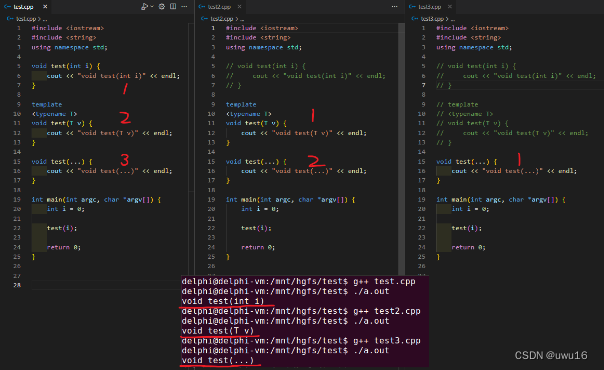
- C++中仍然支持C语言中的可变参数函数
- C++编译器的 匹配调用 优先级:重载函数 > 函数模板 > 变参函数
#include
#include
using namespace std;void test(int i) {cout << "void test(int i)" << endl;
}template

void test(T v) {cout << "void test(T v)" << endl;
}void test(...) {cout << "void test(...)" << endl;
}int main(int argc, char *argv[]) {int i = 0;test(i);return 0;
}
1.2 思路
将变量分为两类:指针 VS 非指针
- 编写函数:
指针变量调用时返回true
非指针变量调用时返回false
1.3 函数模板与变参函数的化学反应
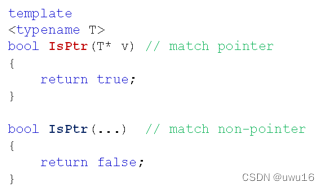
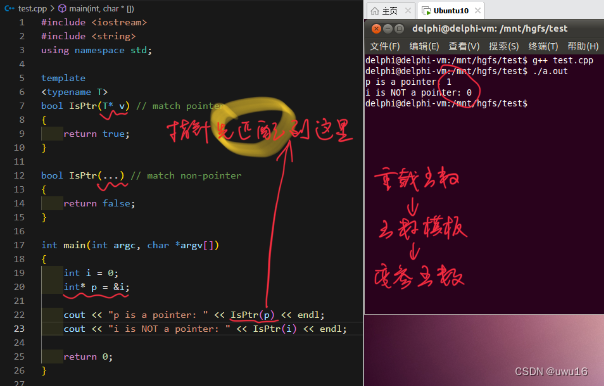
根据参数的匹配,返回true就是指针,变参函数返回false就不是指针。
1.4 编程实验:指针判断
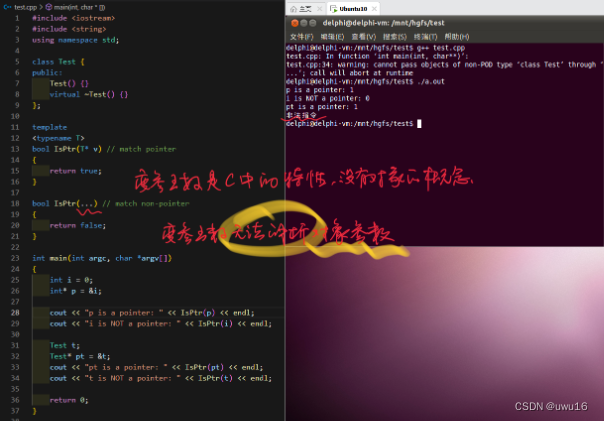
1.5 存在的缺陷
变参函数无法解析对象参数,可能造成程序崩溃
- 如何让编译器精确匹配函数,但不进行实际的调用?只去进行匹配而不运行?
#include
#include using namespace std;class Test
{
public:Test(){}virtual ~Test(){}
};template

char IsPtr(T* v) // match pointer
{return 'd';
}int IsPtr(...)  // match non-pointer
{return 0;
}#define ISPTR(p) (sizeof(IsPtr(p)) == sizeof(char))int main(int argc, char *argv[])
{int i = 0;int* p = &i;cout << "p is a pointer: " << ISPTR(p) << endl;    // truecout << "i is a pointer: " << ISPTR(i) << endl;    // falseTest t;Test* pt = &t;cout << "pt is a pointer: " << ISPTR(pt) << endl;    // truecout << "t is a pointer: " << ISPTR(t) << endl;    // falsereturn 0;
}
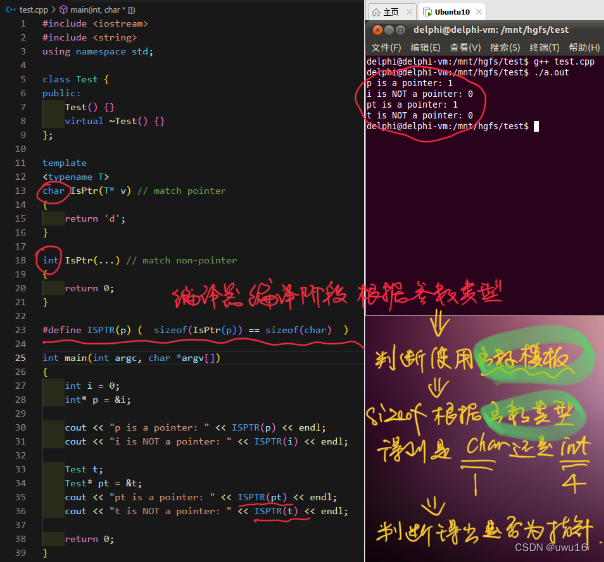
- 注解: 编译器 编译阶段 根据参数类型,判断使用哪个函数,sizeof可以根据函数类型给出相应计算结果(没有调用函数)。
2. 问题二
如果构造函数中抛出异常会发生什么情况?
2.1 构造函数中抛出异常
- 构造过程立即停止
- 当前对象无法生成
- 析构函数不会被调用
- 对象所占用的空间立即收回
2.2 工程项目中的建议
不要在构造函数中抛出异常
当构造函数可能产生异常时,使用二阶构造模式
2.3 编程实验:构造中的异常
#include
#include using namespace std;class Test
{
public:Test(){cout << "Test()" << endl;throw 0;}virtual ~Test(){cout << "~Test()" << endl;}
};int main(int argc, char *argv[])
{Test* p = reinterpret_cast(1);try{p = new Test();}catch(...){cout << "Exception..." << endl;}cout << "p = " << p << endl;return 0;
}
注:reinterpret 是“重新解释”的意思,顾名思义,reinterpret_cast 这种转换仅仅是对二进制位的重新解释,不会借助已有的转换规则对数据进行调整,非常简单粗暴。
http://c.biancheng.net/view/2343.html
2.4 析构中的异常
- 避免在析构中抛出异常
- 析构函数的异常将导致:对象所使用的资源无法完全释放
3. 小结
- C++中依然支持变参函数
- 变参函数无法很好的处理对象参数
- 利用函数模板和变参函数能够判断指针变量
- 构造函数和析构函数中不要抛出异常
下一篇:2022安洵杯babybf
相关内容
热门资讯
埃菲尔铁塔在哪 中国仿建埃菲尔...
2019年4月26日,广西南宁市,街头惊现一座巨型山寨版埃菲尔铁塔,高约20米,白色塔身,造型逼真,...
北京的名胜古迹 北京最著名的景...
北京从元代开始,逐渐走上帝国首都的道路,先是成为大辽朝五大首都之一的南京城,随着金灭辽,金代从海陵王...
苗族的传统节日 贵州苗族节日有...
【岜沙苗族芦笙节】岜沙,苗语叫“分送”,距从江县城7.5公里,是世界上最崇拜树木并以树为神的枪手部落...
长白山自助游攻略 吉林长白山游...
昨天介绍了西坡的景点详细请看链接:一个人的旅行,据说能看到长白山天池全凭运气,您的运气如何?今日介绍...
应用未安装解决办法 平板应用未...
---IT小技术,每天Get一个小技能!一、前言描述苹果IPad2居然不能安装怎么办?与此IPad不...
猫咪吃了塑料袋怎么办 猫咪误食...
你知道吗?塑料袋放久了会长猫哦!要说猫咪对塑料袋的喜爱程度完完全全可以媲美纸箱家里只要一有塑料袋的响...
脚上的穴位图 脚面经络图对应的...
人体穴位作用图解大全更清晰直观的标注了各个人体穴位的作用,包括头部穴位图、胸部穴位图、背部穴位图、胳...
世界上最漂亮的人 世界上最漂亮...
此前在某网上,选出了全球265万颜值姣好的女性。从这些数量庞大的女性群体中,人们投票选出了心目中最美...
demo什么意思 demo版本...
618快到了,各位的小金库大概也在准备开闸放水了吧。没有小金库的,也该向老婆撒娇卖萌服个软了,一切只...
埃菲尔铁塔在哪 中国仿建埃菲尔...
2019年4月26日,广西南宁市,街头惊现一座巨型山寨版埃菲尔铁塔,高约20米,白色塔身,造型逼真,...
苗族的传统节日 贵州苗族节日有...
【岜沙苗族芦笙节】岜沙,苗语叫“分送”,距从江县城7.5公里,是世界上最崇拜树木并以树为神的枪手部落...
北京的名胜古迹 北京最著名的景...
北京从元代开始,逐渐走上帝国首都的道路,先是成为大辽朝五大首都之一的南京城,随着金灭辽,金代从海陵王...
长白山自助游攻略 吉林长白山游...
昨天介绍了西坡的景点详细请看链接:一个人的旅行,据说能看到长白山天池全凭运气,您的运气如何?今日介绍...