

Shiro-SpringBoot (二)
在上一节中实现了在SpringBoot中使用Shiro做权限控制,但是针对上一节留下的不足点,在这里进行一下优化和改造,主要有一下几点:
- 支持AJAX请求
- 支持FreeMarker模板
- URL拦截提取到yml配置文件
(一) 支持AJAX请求
如果是AJAX请求URL接口,没有登录或是没有权限的时候,我们希望是返回指定的JSON格式,而不是进行页面的重定向。当时这个问题也是困扰很久,好在Shiro在这方面提供了很好的扩展,在google帮助下,我决定使用的方案是重写Shiro提供的Filter过滤器,在没有登录或是角色权限认证失败时进行处理。如果是AJAX请求返回指定JSON,普通请求进行页面的重定向。于是乎我找到如下Shiro Filter的关系图:
[外链图片转存失败,源站可能有防盗链机制,建议将图片保存下来直接上传(img-anOXjCjW-1669988699578)(https://img-blog.csdn.net/20170601195007717?watermark/2/text/aHR0cDovL2Jsb2cuY3Nkbi5uZXQvdTAxNDA0MjE0Ng==/font/5a6L5L2T/fontsize/400/fill/I0JBQkFCMA==/dissolve/70/gravity/SouthEast)]
- AdviceFilter 过滤器类似于类似于SpringMVC中的HandlerInterceptor拦截器,用于在请求URL之前进行拦截,主要处理一些是否登录的验证
- PermissionsAuthorizationFilter提供了onAccessDenied方法,主要用于perms资源认证失败时回调onAccessDenied进行一些处理
- RolesAuthorizationFilter提供了onAccessDenied方法,主要用于roles角色认证失败时回调onAccessDenied进行一些处理
(1) 重写AdviceFilter过滤器
class ShiroAdviceFilter extends AdviceFilter {/*** 在访问URL前判断是否登录* @param request* @param response* @return true-继续往下执行,false-该filter过滤器已经处理,不继续执行其他过滤器* @throws Exception*/@Overrideprotected boolean preHandle(ServletRequest request, ServletResponse response) throws Exception {HttpServletRequest httpServletRequest = (HttpServletRequest) request;HttpServletResponse httpServletResponse = (HttpServletResponse) response;User user = (User) httpServletRequest.getSession().getAttribute("user");if (null == user && !StringUtils.contains(httpServletRequest.getRequestURI(), "/login")&& !StringUtils.contains(httpServletRequest.getRequestURI(), "/js")&& !StringUtils.contains(httpServletRequest.getRequestURI(), "/images")) {String requestedWith = httpServletRequest.getHeader("X-Requested-With");if (StringUtils.isNotEmpty(requestedWith) && StringUtils.equals(requestedWith, "XMLHttpRequest")) {//如果是ajax返回指定数据JSONObject json = new JSONObject();json.put("statuscode":500);json.put("message":"没有登录");httpServletResponse.setCharacterEncoding("UTF-8");httpServletResponse.setContentType("application/json");httpServletResponse.getWriter().write(JSONObject.toJSONString(json));return false;} else {//不是ajax进行重定向处理httpServletResponse.sendRedirect("/login");return false;}}return true;}}
(2) Filter过滤器工具类
public class FilterUtils {/*** 如果是ajax返回指定格式数据,如果是普通请求重定向页面* @param servletRequest* @param servletResponse* @throws IOException*/public static void AuthorizationOnAccessDenied(ServletRequest servletRequest, ServletResponse servletResponse) throws IOException {HttpServletRequest httpServletRequest = (HttpServletRequest) servletRequest;HttpServletResponse httpServletResponse = (HttpServletResponse) servletResponse;String requestedWith = httpServletRequest.getHeader("X-Requested-With");if (StringUtils.isNotEmpty(requestedWith) &&StringUtils.equals(requestedWith, "XMLHttpRequest")) {//如果是ajax返回指定格式数据JSONObject json = new JSONObject();json.put("statuscode":403);json.put("message":"角色资源认证失败");httpServletResponse.setCharacterEncoding("UTF-8");httpServletResponse.setContentType("application/json");httpServletResponse.getWriter().write(JSONObject.toJSONString(responseHeader));} else {//如果是普通请求进行重定向httpServletResponse.sendRedirect("/403");}}}
(3) 重写PermissionsAuthorizationFilter过滤器
public class ShiroPermsFilter extends PermissionsAuthorizationFilter {/*** shiro认证perms资源失败后回调方法* @param servletRequest* @param servletResponse* @return* @throws IOException*/@Overrideprotected boolean onAccessDenied(ServletRequest servletRequest, ServletResponse servletResponse) throws IOException {FilterUtils.AuthorizationOnAccessDenied(servletRequest,servletResponse);return false;}
}
(4) 重写RolesAuthorizationFilter过滤器
public class ShiroRolesFilter extends RolesAuthorizationFilter {/*** shiro认证roles角色失败后回调方法* @param servletRequest* @param servletResponse* @return* @throws IOException*/@Overrideprotected boolean onAccessDenied(ServletRequest servletRequest, ServletResponse servletResponse) throws IOException {FilterUtils.AuthorizationOnAccessDenied(servletRequest,servletResponse);return false;}
}
(5) 在上一节Shiro配置类ShiroConfiguration对我们重写的Filter过滤器进行配置,修改如下
//增加ShiroLoginFilter实例化@Bean(name = "shiroLoginFilter")public ShiroLoginFilter shiroLoginFilter(){ShiroLoginFilter shiroLoginFilter = new ShiroLoginFilter();return shiroLoginFilter;}//修改shiroFilterFactoryBean配置@Bean(name = "shiroFilter")public ShiroFilterFactoryBean shiroFilterFactoryBean() {ShiroFilterFactoryBean shiroFilterFactoryBean = new ShiroFilterFactoryBean();shiroFilterFactoryBean.setSecurityManager(securityManager());Map filtersMap = new LinkedHashMap();filtersMap.put("shiroLoginFilter", shiroLoginFilter());filtersMap.put("perms", new ShiroPermsFilter());filtersMap.put("roles",new ShiroRolesFilter());shiroFilterFactoryBean.setFilters(filtersMap);Map filterChainDefinitionMap = new LinkedHashMap();//Shiro拦截URL规则filterChainDefinitionMap.put("/logout", "logout");filterChainDefinitionMap.put("/js/**", "anon");filterChainDefinitionMap.put("/css/**", "anon");filterChainDefinitionMap.put("/login", "anon");filterChainDefinitionMap.put("/403", "anon");filterChainDefinitionMap.put("/userInfo/**", "authc,perms[查看用户模块]");filterChainDefinitionMap.put("/messageInfo/**", "authc,roles[管理员]");filterChainDefinitionMap.put("/**", "authc");shiroFilterFactoryBean.setFilterChainDefinitionMap(filterChainDefinitionMap);return shiroFilterFactoryBean;}
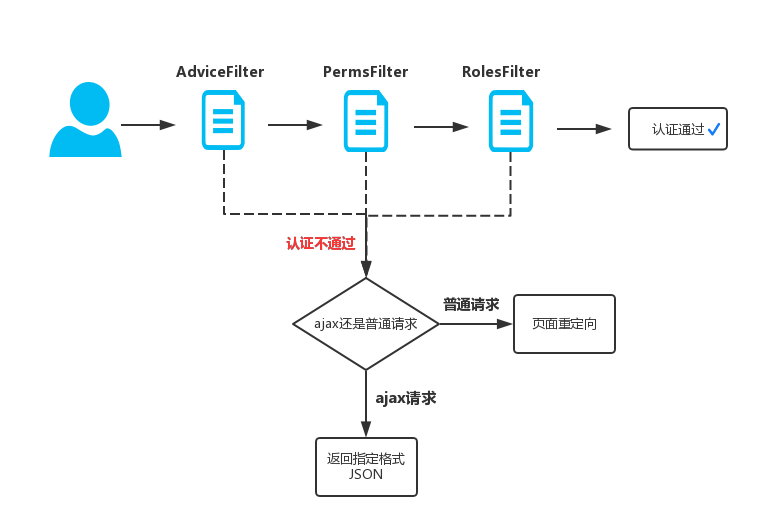
可以看到我们用的是LinkedHashMap将我们写的ShiroLoginFilter、ShiroPermsFilter、ShiroRolesFilter存储起来并设置。这代表用户每一次URL请求,都会按顺序的经过ShiroLoginFilter -> ShiroPermsFilter -> ShiroRolesFilter处理,只有全部都通过认证才会请求成功,否则将返回JSON或是重定向。这样Shiro既能兼容普通请求的重定向,也能在AJAX时返回JSON,流程图如下:
(二) 支持FreeMarker模板
Shiro本身是通提供了JSP的一套标签库,用于在JSP进行权限的控制,对FreeMarker官方是没有提供。但是有大神将其开源到了GitHub,参考shiro-freemarker-tags。下面讲述的是,在SpringBoot项目中使用shiro-freemarker-tags
(1) 在pom.xml中导入依赖
net.mingsoft shiro-freemarker-tags 0.1
(2) 新建FreeMarkerConfig类用于配置FreeMarkers标签
@Service
public class FreeMarkerConfig implements InitializingBean {@Autowiredprivate Configuration configuration;@Overridepublic void afterPropertiesSet() throws Exception {configuration.setSharedVariable("shiro", new ShiroTags());}}
(3) 在FreeMarker页面使用标签库进行权限控制
<@shiro.hasRole name="ADMIN">只有ADMIN的角色才能看到这段文字
<@shiro.hasAnyRoles name="admin,user,member">只有admin或user或member其中一个角色才能看到这段文字
<@shiro.lacksRole name="admin">只有不拥有admin角色才能看到这段文字
<@shiro.hasPermission name="查看用户模块">只有拥有【查看用户模块】资源的用户才能看到这段文字
<@shiro.guest>您当前是游客,关于更多使用请自行查阅标签库
(三) URL拦截提取到yml配置文件
之前在ShiroConfiguration配置类的shiroFilterFactoryBean方法中,我们拦截的URL使用LinkedHashMap写在了代码里面,这样后期维护和可观性不够好,我们可以把URL的拦截单独提取到yml配置文件。这里不选择properties文件,是因为properties文件是不支持有序的,这里URL的顺序请务必保持有序的加载。
(1) 在yml文件中配置我们的URL拦截规则
shiro:filterUrl:/logout: logout/js/**: anon/css/**: anon/images/**: anon/login/**: anon/logout/**: anon/403/**: anon/userInfo/**: authc,perms[查看用户模块]/messageInfo/**: authc,roles[管理员]/**: authc
(2) 新建ShiroUrlStrategy用于从yml加载配置
@EnableConfigurationProperties
@ConfigurationProperties(prefix = "shiro") //yml配置文件的前缀
public class ShiroUrlStrategy {private LinkedHashMap filterChainDefinitionMap;public LinkedHashMap getFilterChainDefinitionMap() {return filterChainDefinitionMap;}public void setFilterChainDefinitionMap(LinkedHashMap filterChainDefinitionMap) {this.filterChainDefinitionMap = filterChainDefinitionMap;}
}
(3) 修改ShiroConfiguration配置类
//修改shiroFilterFactoryBean配置@Bean(name = "shiroFilter")public ShiroFilterFactoryBean shiroFilterFactoryBean() {ShiroFilterFactoryBean shiroFilterFactoryBean = new ShiroFilterFactoryBean();shiroFilterFactoryBean.setSecurityManager(securityManager());Map filtersMap = new LinkedHashMap();filtersMap.put("shiroLoginFilter", shiroLoginFilter());filtersMap.put("perms", new ShiroPermsFilter());filtersMap.put("roles",new ShiroRolesFilter());shiroFilterFactoryBean.setFilters(filtersMap);//从配置获取URL拦截规则ShiroUrlStrategy shiroUrlStrategy = ShiroUrlStrategy();LinkedHashMap filterChainDefinitionManager = shiroUrlFiler.getFilterChainDefinitionMap();shiroFilterFactoryBean.setFilterChainDefinitionMap(filterChainDefinitionManager);return shiroFilterFactoryBean;}