

logd守护进程
创始人
2024-05-26 07:43:20
logd守护进程
- 1、adb logcat命令
- 2、logd守护进程启动
- 2.1 logd文件目录
- 2.2 main方法启动
- 3、LogBuffer缓存大小
- 3.1 缓存大小优先级设置
- 3.2 缓存大小相关代码位置
android12-release
1、adb logcat命令
| 命令 | 功能 |
|---|---|
| adb bugreport > bugreport.txt | bugreport 日志 |
| adb shell dmesg > dmesg.txt | dmesg 日志 |
| adb logcat -d -v time -b “main” > main.txt | main 日志 |
| adb logcat -d -v time -b “system” > system.txt | system日志 |
| adb logcat -d -v time -b “events” > events.txt | events 日志 |
| adb logcat -b crash | 输出crash日志 |
| … … | 等等 |
| adb logcat -h | 查看logcat命令帮助 |
Usage: logcat [options] [filterspecs]General options:-b, --buffer= Request alternate ring buffer(s):main system radio events crash default allAdditionally, 'kernel' for userdebug and eng builds, and'security' for Device Owner installations.Multiple -b parameters or comma separated list of buffers areallowed. Buffers are interleaved.Default -b main,system,crash,kernel.-L, --last Dump logs from prior to last reboot from pstore.-c, --clear Clear (flush) the entire log and exit.if -f is specified, clear the specified file and its related rotatedlog files instead.if -L is specified, clear pstore log instead.-d Dump the log and then exit (don't block).--pid= Only print logs from the given pid.--wrap Sleep for 2 hours or when buffer about to wrap whichevercomes first. Improves efficiency of polling by providingan about-to-wrap wakeup.Formatting:-v, --format= Sets log print format verb and adverbs, where is one of:brief help long process raw tag thread threadtime timeModifying adverbs can be added:color descriptive epoch monotonic printable uid usec UTC year zoneMultiple -v parameters or comma separated list of format and formatmodifiers are allowed.-D, --dividers Print dividers between each log buffer.-B, --binary Output the log in binary.Outfile files:-f, --file= Log to file instead of stdout.-r, --rotate-kbytes= Rotate log every kbytes. Requires -f option.-n, --rotate-count= Sets max number of rotated logs to , default 4.--id= If the signature for logging to file changes, then clear theassociated files and continue.Logd control:These options send a control message to the logd daemon on device, print its return message ifapplicable, then exit. They are incompatible with -L, as these attributes do not apply to pstore.-g, --buffer-size Get the size of the ring buffers within logd.-G, --buffer-size= Set size of a ring buffer in logd. May suffix with K or M.This can individually control each buffer's size with -b.-S, --statistics Output statistics.--pid can be used to provide pid specific stats.-p, --prune Print prune rules. Each rule is specified as UID, UID/PID or /PID. A'~' prefix indicates that elements matching the rule should be prunedwith higher priority otherwise they're pruned with lower priority. Allother pruning activity is oldest first. Special case ~! represents anautomatic pruning for the noisiest UID as determined by the currentstatistics. Special case ~1000/! represents pruning of the worst PIDwithin AID_SYSTEM when AID_SYSTEM is the noisiest UID.-P, --prune=' ...' Set prune rules, using same format as listed above. Must be quoted.Filtering:-s Set default filter to silent. Equivalent to filterspec '*:S'-e, --regex= Only print lines where the log message matches where isan ECMAScript regular expression.-m, --max-count= Quit after printing lines. This is meant to be paired with--regex, but will work on its own.--print This option is only applicable when --regex is set and only useful if--max-count is also provided.With --print, logcat will print all messages even if they do notmatch the regex. Logcat will quit after printing the max-count numberof lines that match the regex.-t Print only the most recent lines (implies -d).-t '
2、logd守护进程启动
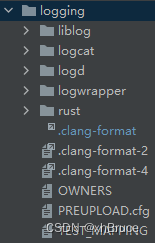
2.1 logd文件目录
Android系统启动 查看 init 进程解析 rc 文件,其中解析 logd.rc,调用到logd/main.cpp主函数。
相关目录:
system/logging/logd/logd.rc
system/logging/logd/main.cpp
logd.rc文件:
service logd /system/bin/logdsocket logd stream 0666 logd logdsocket logdr seqpacket 0666 logd logdsocket logdw dgram+passcred 0222 logd logdfile /proc/kmsg rfile /dev/kmsg wuser logdgroup logd system package_info readproccapabilities SYSLOG AUDIT_CONTROLpriority 10writepid /dev/cpuset/system-background/tasksservice logd-reinit /system/bin/logd --reinitoneshotdisableduser logdgroup logdwritepid /dev/cpuset/system-background/tasks# Limit SELinux denial generation to 5/second
service logd-auditctl /system/bin/auditctl -r 5oneshotdisableduser logdgroup logdcapabilities AUDIT_CONTROLon fswrite /dev/event-log-tags "# content owned by logd
"chown logd logd /dev/event-log-tagschmod 0644 /dev/event-log-tagson property:sys.boot_completed=1start logd-auditctl
2.2 main方法启动
-
- 使用
android::base::KernelLogger调试logd内部的日志输出,这部分日志输出到kernel log中,通过dmesg获取/dev/kmsg
- 使用
-
- 处理“reinit”命令
-
ro.logd.kernel属性控制获取/proc/kmsg的FD
-
- log_buffer 有
chatty、serialized、simple模式(默认serialized),通过属性logd.buffer_type获取;LogBuffer 是负责保存所有日志条目的对象。
- log_buffer 有
-
- 相关监听线程:
- /dev/socket/logdr LogReader监听
- /dev/socket/logdw LogListener监听
- /dev/socket/logd CommandListener监听
int main(int argc, char* argv[]) {// We want EPIPE when a reader disconnects, not to terminate logd.signal(SIGPIPE, SIG_IGN);// logd is written under the assumption that the timezone is UTC.// If TZ is not set, persist.sys.timezone is looked up in some time utility// libc functions, including mktime. It confuses the logd time handling,// so here explicitly set TZ to UTC, which overrides the property.setenv("TZ", "UTC", 1);// issue reinit command. KISS argument parsing.if ((argc > 1) && argv[1] && !strcmp(argv[1], "--reinit")) {return issueReinit();}android::base::InitLogging(argv, [](android::base::LogId log_id, android::base::LogSeverity severity,const char* tag, const char* file, unsigned int line, const char* message) {if (tag && strcmp(tag, "logd") != 0) {auto prefixed_message = android::base::StringPrintf("%s: %s", tag, message);android::base::KernelLogger(log_id, severity, "logd", file, line,prefixed_message.c_str());} else {android::base::KernelLogger(log_id, severity, "logd", file, line, message);}});static const char dev_kmsg[] = "/dev/kmsg";int fdDmesg = android_get_control_file(dev_kmsg);if (fdDmesg < 0) {fdDmesg = TEMP_FAILURE_RETRY(open(dev_kmsg, O_WRONLY | O_CLOEXEC));}int fdPmesg = -1;bool klogd = GetBoolPropertyEngSvelteDefault("ro.logd.kernel");if (klogd) {SetProperty("ro.logd.kernel", "true");static const char proc_kmsg[] = "/proc/kmsg";fdPmesg = android_get_control_file(proc_kmsg);if (fdPmesg < 0) {fdPmesg = TEMP_FAILURE_RETRY(open(proc_kmsg, O_RDONLY | O_NDELAY | O_CLOEXEC));}if (fdPmesg < 0) PLOG(ERROR) << "Failed to open " << proc_kmsg;}bool auditd = GetBoolProperty("ro.logd.auditd", true);DropPrivs(klogd, auditd);// A cache of event log tagsLogTags log_tags;// Pruning configuration.PruneList prune_list;std::string buffer_type = GetProperty("logd.buffer_type", "serialized");// Partial (required for chatty) or full logging statistics.LogStatistics log_statistics(GetBoolPropertyEngSvelteDefault("logd.statistics"),buffer_type == "serialized");// Serves the purpose of managing the last logs times read on a socket connection, and as a// reader lock on a range of log entries.LogReaderList reader_list;// LogBuffer is the object which is responsible for holding all log entries.LogBuffer* log_buffer = nullptr;if (buffer_type == "chatty") {log_buffer = new ChattyLogBuffer(&reader_list, &log_tags, &prune_list, &log_statistics);} else if (buffer_type == "serialized") {log_buffer = new SerializedLogBuffer(&reader_list, &log_tags, &log_statistics);} else if (buffer_type == "simple") {log_buffer = new SimpleLogBuffer(&reader_list, &log_tags, &log_statistics);} else {LOG(FATAL) << "buffer_type must be one of 'chatty', 'serialized', or 'simple'";}// LogReader listens on /dev/socket/logdr. When a client// connects, log entries in the LogBuffer are written to the client.LogReader* reader = new LogReader(log_buffer, &reader_list);if (reader->startListener()) {return EXIT_FAILURE;}// LogListener listens on /dev/socket/logdw for client// initiated log messages. New log entries are added to LogBuffer// and LogReader is notified to send updates to connected clients.LogListener* swl = new LogListener(log_buffer);if (!swl->StartListener()) {return EXIT_FAILURE;}// Command listener listens on /dev/socket/logd for incoming logd// administrative commands.CommandListener* cl = new CommandListener(log_buffer, &log_tags, &prune_list, &log_statistics);if (cl->startListener()) {return EXIT_FAILURE;}// LogAudit listens on NETLINK_AUDIT socket for selinux// initiated log messages. New log entries are added to LogBuffer// and LogReader is notified to send updates to connected clients.LogAudit* al = nullptr;if (auditd) {int dmesg_fd = GetBoolProperty("ro.logd.auditd.dmesg", true) ? fdDmesg : -1;al = new LogAudit(log_buffer, dmesg_fd, &log_statistics);}LogKlog* kl = nullptr;if (klogd) {kl = new LogKlog(log_buffer, fdDmesg, fdPmesg, al != nullptr, &log_statistics);}readDmesg(al, kl);// failure is an option ... messages are in dmesg (required by standard)if (kl && kl->startListener()) {delete kl;}if (al && al->startListener()) {delete al;}TEMP_FAILURE_RETRY(pause());return EXIT_SUCCESS;
}
3、LogBuffer缓存大小
3.1 缓存大小优先级设置
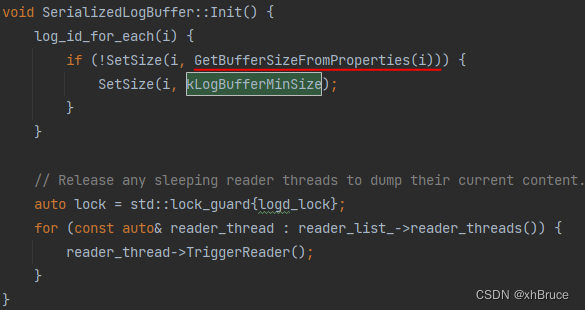
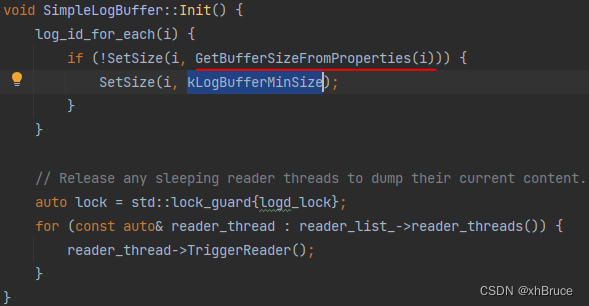
1、persist.logd.size.[buffer_name]; 比如buffer_name为main、system、events、crash;
2、ro.logd.size.[buffer_name]
3、persist.logd.size 开发模式中可以设置大小
4、ro.logd.size
5、kLogBufferMinSize = 64 * 1024 默认64k
3.2 缓存大小相关代码位置
system/logging/logd/SerializedLogBuffer.cpp
system/logging/logd/SimpleLogBuffer.cpp
system/logging/logd/ChattyLogBuffer.cpp

system/logging/logd/LogBuffer.h
system/logging/logd/LogSize.cpp
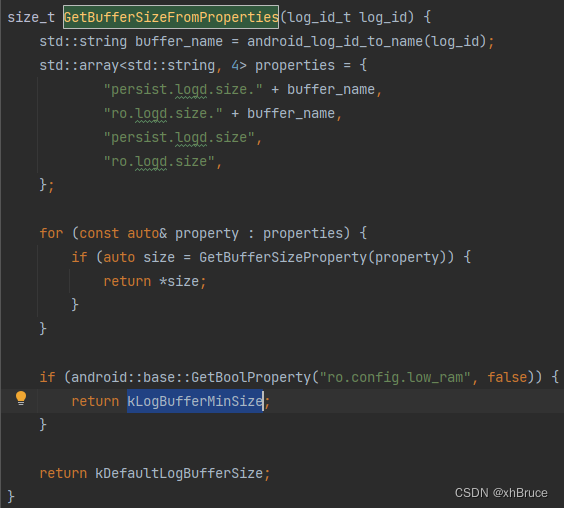
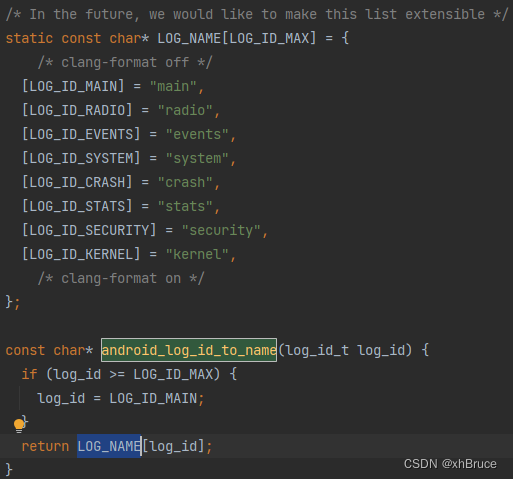
system/logging/liblog/logger_name.cpp
相关内容
热门资讯
埃菲尔铁塔在哪 中国仿建埃菲尔...
2019年4月26日,广西南宁市,街头惊现一座巨型山寨版埃菲尔铁塔,高约20米,白色塔身,造型逼真,...
苗族的传统节日 贵州苗族节日有...
【岜沙苗族芦笙节】岜沙,苗语叫“分送”,距从江县城7.5公里,是世界上最崇拜树木并以树为神的枪手部落...
北京的名胜古迹 北京最著名的景...
北京从元代开始,逐渐走上帝国首都的道路,先是成为大辽朝五大首都之一的南京城,随着金灭辽,金代从海陵王...
长白山自助游攻略 吉林长白山游...
昨天介绍了西坡的景点详细请看链接:一个人的旅行,据说能看到长白山天池全凭运气,您的运气如何?今日介绍...
应用未安装解决办法 平板应用未...
---IT小技术,每天Get一个小技能!一、前言描述苹果IPad2居然不能安装怎么办?与此IPad不...
脚上的穴位图 脚面经络图对应的...
人体穴位作用图解大全更清晰直观的标注了各个人体穴位的作用,包括头部穴位图、胸部穴位图、背部穴位图、胳...
猫咪吃了塑料袋怎么办 猫咪误食...
你知道吗?塑料袋放久了会长猫哦!要说猫咪对塑料袋的喜爱程度完完全全可以媲美纸箱家里只要一有塑料袋的响...
demo什么意思 demo版本...
618快到了,各位的小金库大概也在准备开闸放水了吧。没有小金库的,也该向老婆撒娇卖萌服个软了,一切只...
世界上最漂亮的人 世界上最漂亮...
此前在某网上,选出了全球265万颜值姣好的女性。从这些数量庞大的女性群体中,人们投票选出了心目中最美...
埃菲尔铁塔在哪 中国仿建埃菲尔...
2019年4月26日,广西南宁市,街头惊现一座巨型山寨版埃菲尔铁塔,高约20米,白色塔身,造型逼真,...
苗族的传统节日 贵州苗族节日有...
【岜沙苗族芦笙节】岜沙,苗语叫“分送”,距从江县城7.5公里,是世界上最崇拜树木并以树为神的枪手部落...
北京的名胜古迹 北京最著名的景...
北京从元代开始,逐渐走上帝国首都的道路,先是成为大辽朝五大首都之一的南京城,随着金灭辽,金代从海陵王...
长白山自助游攻略 吉林长白山游...
昨天介绍了西坡的景点详细请看链接:一个人的旅行,据说能看到长白山天池全凭运气,您的运气如何?今日介绍...
世界上最漂亮的人 世界上最漂亮...
此前在某网上,选出了全球265万颜值姣好的女性。从这些数量庞大的女性群体中,人们投票选出了心目中最美...
应用未安装解决办法 平板应用未...
---IT小技术,每天Get一个小技能!一、前言描述苹果IPad2居然不能安装怎么办?与此IPad不...
脚上的穴位图 脚面经络图对应的...
人体穴位作用图解大全更清晰直观的标注了各个人体穴位的作用,包括头部穴位图、胸部穴位图、背部穴位图、胳...
demo什么意思 demo版本...
618快到了,各位的小金库大概也在准备开闸放水了吧。没有小金库的,也该向老婆撒娇卖萌服个软了,一切只...
猫咪吃了塑料袋怎么办 猫咪误食...
你知道吗?塑料袋放久了会长猫哦!要说猫咪对塑料袋的喜爱程度完完全全可以媲美纸箱家里只要一有塑料袋的响...