
C++ 手动实现双向链表(作业版)
双向链表,并实现增删查改等功能
首先定义节点类,类成员包含当前节点的值, 指向下一个节点的指针和指向上一个节点的指针
//节点定义
template
class Node {
public:Node* prior;T value;Node* next;Node():value(0),prior(nullptr),next(nullptr) {}Node(T n):prior(nullptr),value(n),next(nullptr) {}
};
然后是链表类的定义,主要包含了增删查改等功能
//双向链表定义
template
class LinkList_doubly {
public:Node* firstNode;Node* lastNode;LinkList_doubly();LinkList_doubly(int n, const T* arr);LinkList_doubly(const LinkList_doubly& link);~LinkList_doubly();LinkList_doubly& push_back(T n);LinkList_doubly& push_front(T n);LinkList_doubly& insert(int pos, int n, T* arr);LinkList_doubly& pop_front();LinkList_doubly& pop_back();LinkList_doubly& remove(int pos, int num);LinkList_doubly& reverse();T& operator[](int n);T& at(int n);LinkList_doubly& replace(int pos, int n, T* arr);int getLen() {return len;}void clear() {this->~LinkList_doubly();}void display();
private:int len = 0;Node* getNode_next(int n);};
各个函数解释:
LinkList_doubly(); 默认构造函数
LinkList_doubly(const T* arr, int len); 一般构造函数
LinkList_doubly(const LinkList
~LinkList_doubly(); 析构函数
LinkList_doubly
LinkList_doubly
LinkList_doubly
LinkList_doubly
LinkList_doubly
LinkList_doubly
LinkList_doubly
T& operator[](int n); 重载[ ]运算符,返回第n个节点的值
T& at(int n); 与[ ]一样,只不过会检查索引是否越界
LinkList_doubly
int getLen() {return len;} 返回长度,因为len是private
void clear() {this->~LinkList();} 清除链表
void display(); 显示链表所有元素
Node
#include
using namespace std;template
class Node {
public:Node* prior;T value;Node* next;Node():value(0),prior(nullptr),next(nullptr) {}Node(T n):prior(nullptr),value(n),next(nullptr) {}
};template
class LinkList_doubly {
public:Node* firstNode;Node* lastNode;LinkList_doubly();LinkList_doubly(int n, const T* arr);LinkList_doubly(const LinkList_doubly& link);~LinkList_doubly();LinkList_doubly& push_back(T n);LinkList_doubly& push_front(T n);LinkList_doubly& insert(int pos, int n, T* arr);LinkList_doubly& pop_front();LinkList_doubly& pop_back();LinkList_doubly& remove(int pos, int num);LinkList_doubly& reverse();T& operator[](int n);T& at(int n);LinkList_doubly& replace(int pos, int n, T* arr);int getLen() {return len;}void clear() {this->~LinkList_doubly();}void display();
private:int len = 0;Node* getNode_next(int n);};//默认构造函数
template
LinkList_doubly::LinkList_doubly() {firstNode = nullptr;lastNode = nullptr;len = 0;
}//一般构造函数,用数组进行初始化
template
LinkList_doubly::LinkList_doubly(int n, const T* arr) {Node* temp1 = nullptr;Node* temp2 = nullptr;for (int i = 0; i < n; i++) {temp1 = new Node (arr[i]);if ( i == 0 )firstNode = temp1;if ( i == n-1 )lastNode = temp1;temp1->prior = temp2;if ( i > 0 )temp2->next  = temp1;temp2 = temp1;}this->len = n;
}//拷贝构造函数
template
LinkList_doubly::LinkList_doubly(const LinkList_doubly& link) {this->firstNode = link.firstNode;this->lastNode  = link.lastNode;this->len = link.getLen();
}//析构函数
template
LinkList_doubly::~LinkList_doubly() {this->len = 0;Node* temp = firstNode;lastNode = nullptr;while ( firstNode ) {temp = firstNode;firstNode = firstNode->next;delete temp;temp = nullptr;}
}//在尾部添加一个元素
template
LinkList_doubly& LinkList_doubly::push_back(T n) {Node* newNode = new Node (n);newNode->prior = lastNode;lastNode->next = newNode;lastNode = newNode;len++;return *this;
}//在头部添加一个元素
template
LinkList_doubly& LinkList_doubly::push_front(T n) {Node* newNode = new Node (n);newNode->next = firstNode;firstNode->prior = newNode;firstNode = newNode;len++;return *this;
}//在position位置插入n个元素
template
LinkList_doubly& LinkList_doubly::insert(int pos, int n, T* arr) {Node* temp_end = getNode_next(pos);Node* temp_front = getNode_next(pos-1);Node* temp_new = nullptr;for ( int i = 0; i < n; i++ ) {temp_new = new Node (arr[i]);temp_front->next = temp_new;temp_new->prior = temp_front;temp_front = temp_front->next;}temp_front->next = temp_end;temp_end->prior = temp_front;len += n;return *this;
}//删除第一个元素
template
LinkList_doubly& LinkList_doubly::pop_front() {firstNode = firstNode->next;firstNode->prior = nullptr;len--;return *this;
}//删除最后一个元素
template
LinkList_doubly& LinkList_doubly::pop_back() {lastNode = lastNode->prior;lastNode->next = nullptr;len--;return *this;
}//删除position开始的num个元素
template
LinkList_doubly& LinkList_doubly::remove(int pos, int num) {Node* temp_front = getNode_next(pos-1);Node* temp_end = getNode_next(pos+num);temp_front->next = temp_end;temp_end->prior = temp_front;len -= num;return *this;
}//替换元素
template
LinkList_doubly& LinkList_doubly::replace(int pos, int n, T* arr) {Node* temp = getNode_next(pos);for ( int i = 0; i < n; i++ ) {temp->value = arr[i];temp = temp->next;}return *this;
}//反转链表,终极偷懒写法,实在不想动脑子了
template
LinkList_doubly& LinkList_doubly::reverse() {const int num = len;T arr[num];Node* temp = firstNode;for ( int i = 0; i < this->len; i++ ) {arr[i] = temp->value;temp = temp->next;}temp = lastNode;for ( int i = 0; i < this->len; i++ ) {temp->value = arr[i];temp = temp->prior;}return *this;
}//访问第n个元素
template
T& LinkList_doubly::operator[](int n){Node* temp = nullptr;if ( n <= len/2 ) {temp = firstNode;for ( int i = 0; i < n; i++ ) {temp = temp->next;}} else {temp = lastNode;for ( int i = 0; i < len-1-n; i++ ) {temp = temp->prior;}}return temp->value;}//访问第n个元素,增加索引检查template
T& LinkList_doubly::at(int n){if ( n < 0 || n > len-1 ) {cout << "[error]:index out of range" << endl;exit(0);}return (*this)[n];
}
//获取第n个Node的next指针
template
Node* LinkList_doubly::getNode_next(int n) {if ( n > len-1 ) {cout << "[error]: illegal index" << endl;}Node* temp = firstNode;for ( int i = 0; i < n; i++ ) {temp = temp->next;}return temp;
}//显示链表所有元素,会对链表正反向一致性进行检查
template
void LinkList_doubly::display() {const int num = len;T arr1[num];T arr2[num];Node* temp = firstNode;for ( int i = 0; i < this->len; i++ ) {arr1[i] = temp->value;temp = temp->next;}temp = lastNode;for ( int i = 0; i < this->len; i++ ) {arr2[i] = temp->value;temp = temp->prior;}for ( int i = 0; i < this->len; i++ ) {if ( arr1[i] != arr2[len-1-i] ) {cout << "第"<len; i++ ) {cout << temp->value << " ";temp = temp->next;}cout << endl;
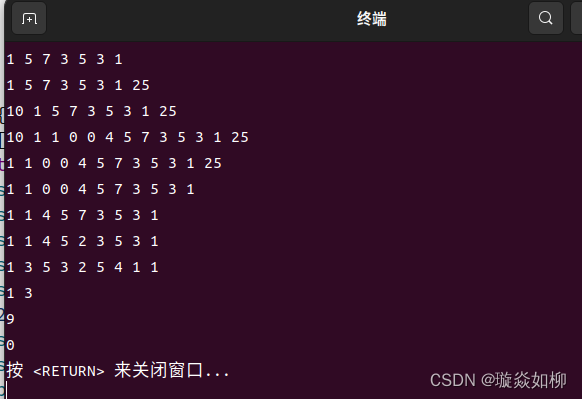
}int main() {int arr[] = {1,5,7,3,5,3,1};LinkList_doubly link(sizeof(arr)/sizeof(int), arr);link.display();link.push_back(25);link.display();link.push_front(10);link.display();int arr2[] = {1,0,0,4};link.insert(2,sizeof(arr2)/sizeof(int), arr2);link.display();link.pop_front();link.display();link.pop_back();link.display();link.remove(2,2);link.display();int arr3[] = {2,3,5};link.replace(4, sizeof(arr3)/sizeof(int), arr3);link.display();link.reverse();link.display();cout << link[8] << " " << link.at(3) << endl;cout << link.getLen() << endl;link.~LinkList_doubly();cout << link.getLen() << endl;}