

【Netty源码系列(二)】解读EventLoopGroup
【Netty源码系列文章中源码出自4.1.84.Final版本】
文章目录
- 1. EventLoopGroup接口类
- 2. NioEventLoopGroup创建过程
- 2.1 Executor实现机制
- 2.2 EventLoop对象创建(newChild()方法)
本篇文章主要看一下
EventLoopGroup的源码,了解一下它的创建过程。
EventLoopGroup bossGroup = new NioEventLoopGroup(2);EventLoopGroup workerGroup = new NioEventLoopGroup();
1. EventLoopGroup接口类
我们先进入EventLoopGroup类中,看一下这个类的情况。有关这个类的信息都在源码中注释了
/*** 这是一个接口类,继承自EventExecutorGroup * 它的作用就是允许将 事件循环中每个加工过的Channel对象注册进来*/
public interface EventLoopGroup extends EventExecutorGroup {/*** 枚举返回下一个EventLoop对象*/@OverrideEventLoop next();/*** 使用EventLoop注册Channel,当注册完成时,返回通知对象ChannelFuture */ChannelFuture register(Channel channel);/*** 使用EventLoop注册Channel,一旦注册完成,也会返回通知对象ChannelFuture,但是这里传参变为ChannelPromise,* 这个对象内部也维护了一个Channel对象*/ChannelFuture register(ChannelPromise promise);/*** 这个方法已经弃用,上面的方法已经包含这个方法功能*/@DeprecatedChannelFuture register(Channel channel, ChannelPromise promise);
}
ChannelFuture接口类,异步返回Channel的I/O结果。
2. NioEventLoopGroup创建过程
new NioEventLoopGroup(2)
这里传入线程数量参数,就会根据传入的值进行创建,不传时,默认按系统cpu的核数*2进行创建。
进入NioEventLoopGroup类中,一直debug,可以看到如下图所示的过程。
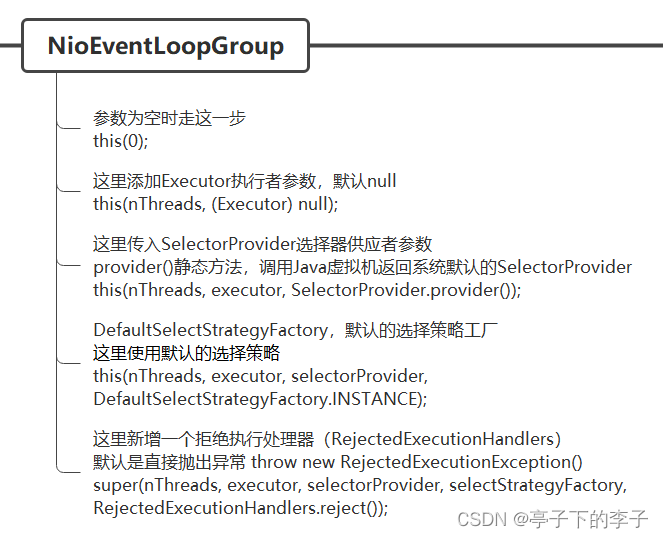
此时,我们进入super(...)这个方法中,进入到MultithreadEventLoopGroup类里面。
protected MultithreadEventLoopGroup(int nThreads, Executor executor, Object... args) {super(nThreads == 0 ? DEFAULT_EVENT_LOOP_THREADS : nThreads, executor, args);}
这时,我们看到一个三目运算,而DEFAULT_EVENT_LOOP_THREADS的值,在这个类加载时,就已经进行赋值操作,正是获取系统可用cpu核数的2倍,如下。
private static final int DEFAULT_EVENT_LOOP_THREADS;static {DEFAULT_EVENT_LOOP_THREADS = Math.max(1, SystemPropertyUtil.getInt("io.netty.eventLoopThreads", NettyRuntime.availableProcessors() * 2));if (logger.isDebugEnabled()) {logger.debug("-Dio.netty.eventLoopThreads: {}", DEFAULT_EVENT_LOOP_THREADS);}}
我们接着进入super(...)方法中,可以看到下面的this(...)方法,看一下注释,说创建一个新的实例,我们再点击进入到真正的方法中MultithreadEventExecutorGroup(...)。
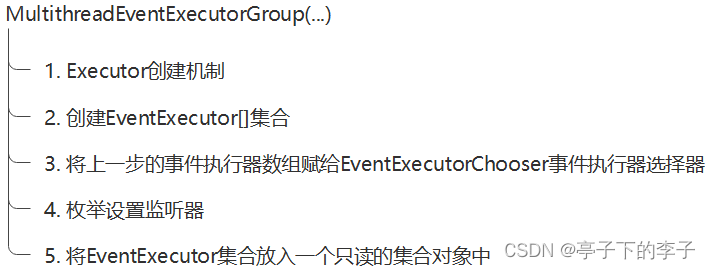
protected MultithreadEventExecutorGroup(int nThreads, Executor executor,EventExecutorChooserFactory chooserFactory, Object... args) {//检查参数nThreadscheckPositive(nThreads, "nThreads");//创建executor对象if (executor == null) {executor = new ThreadPerTaskExecutor(newDefaultThreadFactory());}//创建EventExecutor数组children = new EventExecutor[nThreads];//枚举将生成的EventExecutor对象放入数组中for (int i = 0; i < nThreads; i ++) {boolean success = false;try {//这里是核心,用来生成EventExecutor对象,后面会讲children[i] = newChild(executor, args);success = true;} catch (Exception e) {// TODO: Think about if this is a good exception typethrow new IllegalStateException("failed to create a child event loop", e);} finally {if (!success) {for (int j = 0; j < i; j ++) {children[j].shutdownGracefully();}for (int j = 0; j < i; j ++) {EventExecutor e = children[j];try {while (!e.isTerminated()) {e.awaitTermination(Integer.MAX_VALUE, TimeUnit.SECONDS);}} catch (InterruptedException interrupted) {// Let the caller handle the interruption.Thread.currentThread().interrupt();break;}}}}}chooser = chooserFactory.newChooser(children);final FutureListener这个方法干了这几件事,见下图。我们先整体有个了解,再对其中几个重要的步骤进行深入。
2.1 Executor实现机制
if (executor == null) {executor = new ThreadPerTaskExecutor(newDefaultThreadFactory());}
我们知道,之前参数executor传入的是null值,在这里会进行创建。
newDefaultThreadFactory() 创建默认线程工厂,并为线程设置一些属性,我们进入这个方法中。
//MultithreadEventExecutorGroup类protected ThreadFactory newDefaultThreadFactory() {return new DefaultThreadFactory(getClass());}
下一步:
//DefaultThreadFactory类,实现ThreadFactory接口public DefaultThreadFactory(Class poolType) {this(poolType, false, Thread.NORM_PRIORITY);}
这里新增两个参数,
daemon:守护进程,默认传false
priority:优先级,默认传的是5,即Thread.NORM_PRIORITY
下一步:
public DefaultThreadFactory(Class poolType, boolean daemon, int priority) {this(toPoolName(poolType), daemon, priority);}
toPoolName(poolType)方法,是获取对应的池名称。
下一步:
public DefaultThreadFactory(String poolName, boolean daemon, int priority) {this(poolName, daemon, priority, null);}
新增一个参数,
ThreadGroup:线程组,默认传null
下一步:
public DefaultThreadFactory(String poolName, boolean daemon, int priority, ThreadGroup threadGroup) {//检查池名称不为null,否则抛异常ObjectUtil.checkNotNull(poolName, "poolName");//检查优先级范围if (priority < Thread.MIN_PRIORITY || priority > Thread.MAX_PRIORITY) {throw new IllegalArgumentException("priority: " + priority + " (expected: Thread.MIN_PRIORITY <= priority <= Thread.MAX_PRIORITY)");}//poolId,是AtomicInteger原子对象,用来拼接线程名称前缀//后面对三个属性进行赋值prefix = poolName + '-' + poolId.incrementAndGet() + '-';this.daemon = daemon;this.priority = priority;this.threadGroup = threadGroup;}
到这里,只是对线程工厂的线程进行属性的设置;
回到开始的地方:
executor = new ThreadPerTaskExecutor(newDefaultThreadFactory());
我们进入ThreadPerTaskExecutor这个类中,看一下。
public final class ThreadPerTaskExecutor implements Executor {private final ThreadFactory threadFactory;public ThreadPerTaskExecutor(ThreadFactory threadFactory) {this.threadFactory = ObjectUtil.checkNotNull(threadFactory, "threadFactory");}@Overridepublic void execute(Runnable command) {threadFactory.newThread(command).start();}
}
这个类里,只是把刚刚设置好的线程工厂对象ThreadFactory赋值给ThreadPerTaskExecutor中的属性,这里并没有去调用execute()方法;
真正调用执行的是这个方法:newChild(executor, args)
//MultithreadEventExecutorGroup类protected MultithreadEventExecutorGroup(int nThreads, Executor executor,EventExecutorChooserFactory chooserFactory, Object... args) {...for (int i = 0; i < nThreads; i ++) {boolean success = false;try {//真正去调用执行的方法children[i] = newChild(executor, args);success = true;} catch (Exception e) {// TODO: Think about if this is a good exception typethrow new IllegalStateException("failed to create a child event loop", e);}...}
2.2 EventLoop对象创建(newChild()方法)
我们点击newChild()方法,发现这个一个抽象方法,这里我们看一下它的实现方法,因为创建的是NioEventLoopGroup对象,所以我们选择NioEventLoopGroup这个类的重写方法,点进去看一下:
@Overrideprotected EventLoop newChild(Executor executor, Object... args) throws Exception {...return new NioEventLoop(this, executor, selectorProvider,selectStrategyFactory.newSelectStrategy(),rejectedExecutionHandler, taskQueueFactory, tailTaskQueueFactory);}
这里对之前传入的多个参数,根据不同的参数类型,进行强制转换;然后将转换后的参数传递到NioEventLoop类的构造方法中,创建一个NioEventLoop对象。我们进入它的构造方法中,看一下:
NioEventLoop(NioEventLoopGroup parent, Executor executor, SelectorProvider selectorProvider,SelectStrategy strategy, RejectedExecutionHandler rejectedExecutionHandler,EventLoopTaskQueueFactory taskQueueFactory, EventLoopTaskQueueFactory tailTaskQueueFactory) {super(parent, executor, false, newTaskQueue(taskQueueFactory), newTaskQueue(tailTaskQueueFactory),rejectedExecutionHandler);this.provider = ObjectUtil.checkNotNull(selectorProvider, "selectorProvider");this.selectStrategy = ObjectUtil.checkNotNull(strategy, "selectStrategy");final SelectorTuple selectorTuple = openSelector();this.selector = selectorTuple.selector;this.unwrappedSelector = selectorTuple.unwrappedSelector;}
NioEventLoop构造方法中又调用了它的父类方法,校验参数,获取选择器并赋值。我们进入super(...)方法中。
protected SingleThreadEventLoop(EventLoopGroup parent, Executor executor,boolean addTaskWakesUp, Queue taskQueue, Queue tailTaskQueue,RejectedExecutionHandler rejectedExecutionHandler) {super(parent, executor, addTaskWakesUp, taskQueue, rejectedExecutionHandler);tailTasks = ObjectUtil.checkNotNull(tailTaskQueue, "tailTaskQueue");}
这里也是干了同样的事情,调用父类方法,校验参数。我们再点击super()方法。
protected SingleThreadEventExecutor(EventExecutorGroup parent, Executor executor,boolean addTaskWakesUp, Queue taskQueue,RejectedExecutionHandler rejectedHandler) {super(parent);this.addTaskWakesUp = addTaskWakesUp;this.maxPendingTasks = DEFAULT_MAX_PENDING_EXECUTOR_TASKS;//重点!!!this.executor = ThreadExecutorMap.apply(executor, this);this.taskQueue = ObjectUtil.checkNotNull(taskQueue, "taskQueue");this.rejectedExecutionHandler = ObjectUtil.checkNotNull(rejectedHandler, "rejectedHandler");}
到了这一步,我们会发现不一样了,又出现executor这个对象了,而且通过ThreadExecutorMap.apply(executor, this)这个方法又重新赋值给Executor,我们前面说过,之前创建Executor的时候,只是设置了一些属性参数,并没有真正去调用创建线程的方法,现在这里又出现了,会是这里吗?我们点击apply()方法进去看看。
/*** Decorate the given {@link Executor} and ensure {@link #currentExecutor()} will return {@code eventExecutor}* when called from within the {@link Runnable} during execution.*/public static Executor apply(final Executor executor, final EventExecutor eventExecutor) {ObjectUtil.checkNotNull(executor, "executor");ObjectUtil.checkNotNull(eventExecutor, "eventExecutor");return new Executor() {@Overridepublic void execute(final Runnable command) {executor.execute(apply(command, eventExecutor));}};}
我们看到这里调用execute()这个方法,apply(command, eventExecutor)这个方法通过command.run()生成Runnable对象,然后执行器去调用。
到这里我们大体了解EventLoopGroup的整个创建过程,本文有误的地方,烦请留言指正,谢谢!